 DomCop
Most people use the internet every single day without thinking about how it actually works. When you type a website address into your browser, you are using a domain name to find a specific corner of the web. While buying a domain seems like a simple task, there is a large system running in the background to keep everything organized. At the heart of this system is the domain registry.
But what is a domain registry, and why is it so important for your website?
This article explains the role of a domain registry and how it fits into the bigger picture of the web. We will also clear up some common terms that often sound the same but mean very different things.
What is a Domain Registry?
A domain registry, which is sometimes called a registry operator, is the entity in charge of the master database for a specific top-level domain. For example, when you look at a website like DomCop, the registry manages the .com extension and keeps a record that “domcop.com” is taken.
Domain registries are different from the companies where you usually buy a name (known as registrars) because they do not deal with the general public. Instead, their job is to handle the backend of the internet.
Their main responsibilities include:
- Keeping the official list of all names that are registered or available.
- Setting the wholesale prices that other companies must pay to offer those extensions.
- Promoting and growing the popularity of their specific domain endings.
- Following the global rules set by ICANN to keep the internet safe.
In addition to these tasks, registries must also maintain special technical records that tell the internet where a website is located. These records ensure that when someone types an address into a browser, it points to the correct place.
To put it simply, a registry runs the actual extension, while other companies act as the middleman to sell those names to you.
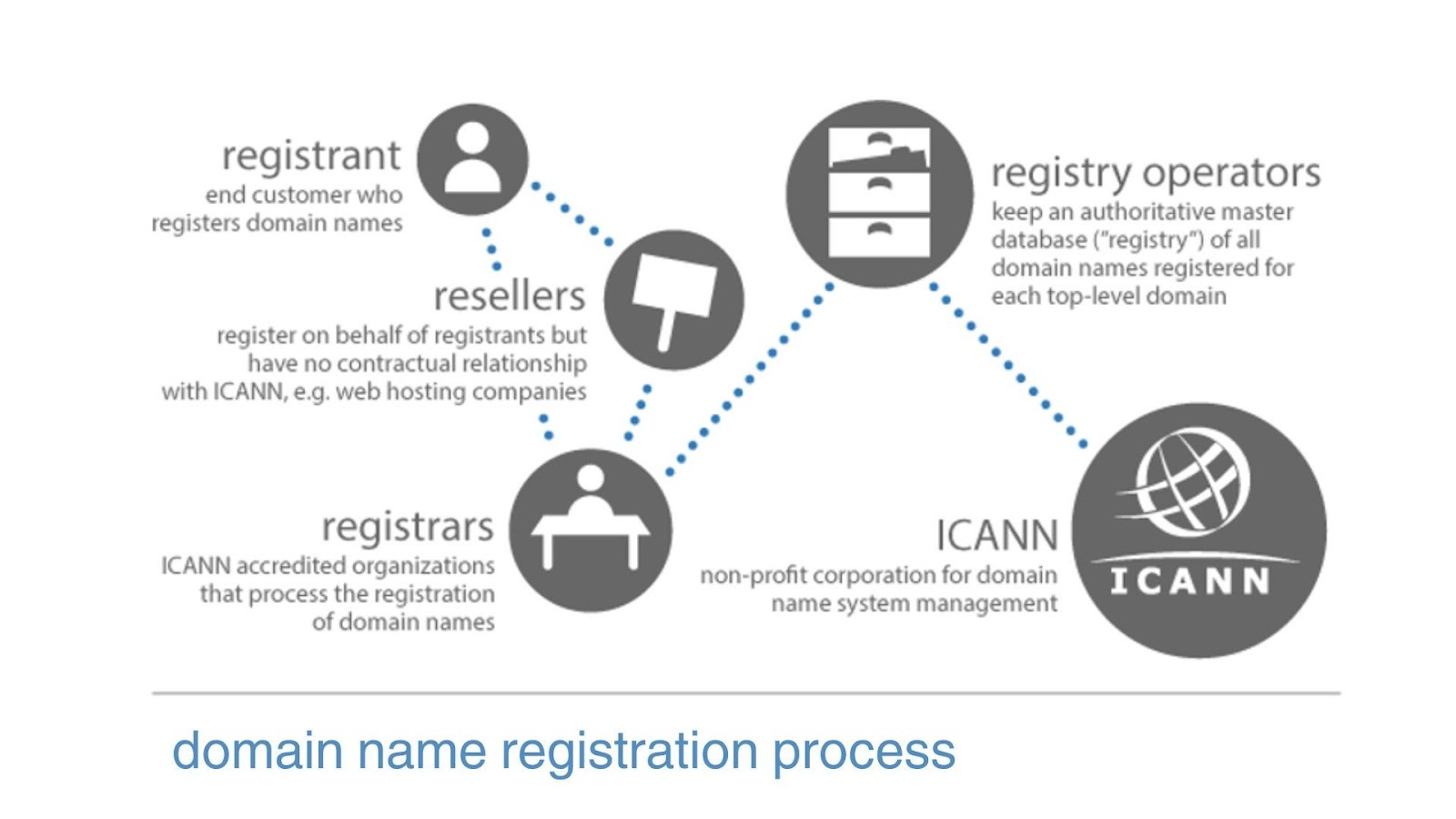
ICANN chart showing the domain registration process, including registry operators, registrars, resellers, registrant, and the role of ICANN
Registry vs. Registrar: What’s the Difference?
To understand the difference between domain registry vs registrar, it helps to think of a domain registry as a manufacturer and a registrar as a retail store. The registry is the organization that creates and manages the domain extension, while the registrar is the business that sells those names to you.
For example, if you wanted to start a website, you would go to a registrar to search for an available name. The registrar then checks the registry to see if that name is available.
The main differences between these two include:
- Customer Interaction: You deal directly with a registrar to buy or renew a name, but you never talk to a registry.
- Pricing: The registry sets a wholesale price, and the registrar adds a small fee for their services and support.
- Support: Registrars provide the tools and help you need to manage your website settings, whereas registries only handle the master list.
- Selection: A registrar usually sells many different extensions like .com, .net, or .org, but a registry usually only manages one or a few of them.
In this relationship, the registrar acts as a middleman. They take your information and your payment, then they notify the registry that you have reserved a specific name. The registry then updates the global database so that the rest of the internet knows you are the one using that address.
Without the registrar, it would be very difficult for a regular person to get a domain name, and without the registry, the extensions themselves would not exist. So, safe to say, both play a vital role here.
Can You Actually Own a Domain?
Even though people often talk about buying and owning domain names, the truth is that registries own all of their domain names. Registrars simply offer you the chance to reserve those names for a certain amount of time.
For example, when we registered DomCop’s address, we didn’t buy the domain name forever. We simply renew it by paying a fee every few years.
The maximum time you can reserve a domain name for is ten years. You can hold onto a name for much longer than that, as most registrars will let you renew your reservation as many times as you want.
However, if you let the domain expire, you lose your right to use it. This is why it is more accurate to say that you lease a domain rather than own it. As long as you keep your lease active and follow the registry’s rules, the name remains yours to use for your website.
Examples of Domain Registries (Like Verisign & ICANN)
Examples of Top Domain Registries
While you might only interact with one or two registrars, there are hundreds of different registries operating behind the scenes. Each one is responsible for its own specific set of extensions.
For example, if you are looking at our site – DomCop, the registry behind its .com address is a company called Verisign. They are one of the biggest names in the industry because they manage the most popular extensions on the web.
Here is the list of domain registries you should know about:
- Verisign: They operate the .com and .net extensions. These are the two most widely used domain endings in the world.
- Public Interest Registry (PIR): This is a non-profit organization that manages the .org extension. It is the go-to choice for many communities and, of course, non-profit groups.
- Identity Digital: This registry manages a huge variety of modern extensions. They are responsible for hundreds of new options, such as .design, .business, and .studio.
- Radix: They focus on creative and tech-related extensions. You will see them managing names that end in .online, .tech, and .store.
Each of these organizations has a different focus. Some, like PIR, are dedicated to serving the public good, while others focus on providing specific industries with unique names. No matter which registry is in charge, they all follow the same basic goal: keeping their part of the internet stable and organized so that your website can be found by anyone, anywhere.
Who Controls Domain Names?
There is no particular company or country that runs the internet. Instead, there is a clear hierarchy of organizations that work together to make sure every web address works correctly and stays unique. So, let’s take a look at who controls domain names:
The Role of ICANN
At the very top is ICANN, the Internet Corporation for Assigned Names and Numbers. This is a non-profit organization that acts as the regulator for the entire naming system. They do not sell domains to the public. Instead, they create the global rules and policies that registries and registrars must follow. Their main job is to coordinate the technical parts of the internet so that your browser always finds the right website.
How Registries Operate Under ICANN
A domain registry is a company that has a contract with ICANN to run a specific extension, like .com or .net. While the registry manages the master database, it must comply with ICANN’s security and dispute-resolution standards. If a registry fails to follow these rules, it can lose its right to manage that extension.
The Hierarchy of the Internet
To see how the process works from start to finish, you can look at this food chain of domain names:
- ICANN: The governing body that sets the rules for the whole world.
- Domain Registry: The organization that manages the master list for an extension (like Verisign for .com).
- Domain Registrar: The company where you go to search for and reserve a name.
- User (Registrant): The person or business that leases the name for their website.
This hierarchy is very important to ensure that everyone gets a fair and organized way to buy a spot on the web. Each level has a specific job to do, which keeps the system reliable and prevents any single company from having total control.
What is a TLD and Registry Operator?
A Top-Level Domain, or TLD, is the last part of a web address that comes after the final dot. In our domain – DomCop.com, the “.com” is the TLD.
Now like we said before, there are many different types of these extensions, ranging from original ones like .net and .org to newer options like .tech or .app. Each TLD acts as a separate category on the internet, helping to organize websites by their purpose, location, or brand.
The Registry Operator is the specific organization that has the technical and legal right to manage a TLD. Their job is to maintain the master list of every domain registered under that extension to ensure no two people have the same address.
For example, since Verisign is the registry operator for .com, it manages the infrastructure that keeps the extension running smoothly. It also makes sure that when you type a .com address, you’re taken to the correct website.
Conclusion
At the end of the day, there are several layers to domain names and their administration, with different bodies responsible for various aspects. When it comes to the structure and systems that keep our web addresses working, domain registries are integral; they are the pillars that protect and support the entire database.
Whether it is a common extension managed by Verisign or a newer one from Identity Digital, anyone looking to establish an online presence needs to understand how these registries fit into the system alongside registrars and ICANN. Domain registries are undoubtedly an important part of the online world.
Domain Registry FAQs
What is a domain registry?
A domain registry is an organization that manages a specific list of website endings, such as .com or .net.
How do domain registries work?
A registry maintains the official master database for a specific extension. When you reserve a name through a store, the registry updates its records to show that the name is taken. They also run the technical systems that make sure your website address points to the right place on the internet.
What is domain registry lock?
A registry lock is a high-level security feature that prevents any unauthorized changes to your domain. When this lock is on, your domain cannot be transferred, deleted, or edited without a strict manual check, providing an extra layer of protection against hackers.
What is the difference between a registry and a registrar?
A registry is the manufacturer that runs the domain extension and maintains the main database. A registrar is the store where you actually go to search for and reserve a domain name for your website.
Who manages .com domains?
The .com extension is managed by a registry operator called Verisign. They are responsible for the technical infrastructure and the master list of all .com names used around the world.
Is ICANN a domain registry?
No, ICANN is the non-profit governing body that sets the rules for the entire internet. They oversee both registries and registrars to make sure the system stays fair, organized, and secure.
Can I buy a domain directly from a registry?
Usually, you cannot buy a name directly from a registry because they do not sell to the general public. You must use a registrar, which acts as the middleman to help you reserve the name and manage your settings.
Who are the biggest domain registrars?
The most well-known companies where you can buy a domain include GoDaddy, Namecheap, and Porkbun. These businesses act as the middleman between you and the registry, providing customer support and tools to manage your website.