 DomCop
Are you not sure about the difference between referring domains vs backlinks? If so, you’ve come to the right place. These two terms can be a complex topic, and it is no surprise that many confuse them.
However, it is important to understand their relationship for creating a great SEO campaign. Backlinks and referring domains are essential for SEO, as they are among the most important factors Google looks at when ranking a website.
This article will define referring domains vs backlinks, explain how they impact your SEO, and provide best practices for building more of them.
What Is a Backlink?
A backlink is basically a hyperlink that connects one website to another. They’re also called inbound or incoming links. Put simply, a backlink is any link on a web page that takes users directly to a different website.
Backlinks are an important part of SEO because they help show search engines that your website is valuable and relevant. They act as feedback, telling search engines what other web pages think about your page. They are the primary way that website crawlers, like Googlebot, use to navigate the web.
A backlink can show up in a few different ways. It’s most commonly placed within text, and the words that contain the link are called anchor text. A backlink can also sit within images, buttons, or even infographics.
There’s no cap on how many backlinks you can get, and one site can link to you many times. So if a single website points to ten different pages on your site, that counts as ten backlinks. Just remember that links between your own pages are internal links, not backlinks.
Types of Backlinks
Backlinks can be categorized by how they are acquired:
- Natural: These are links that happen naturally, which is how search engines expect all backlinks to come to fruition. A great way to get more natural links is to publish a study or data.
- Manual: These are links you’re actively building through outreach, guest posting, or other link-building strategies.
- Editorial (PR Backlinks): These are typically placed on high Domain Rating (DR) websites, but are usually nofollow. They are designed to drive referral traffic rather than organic traffic.
- Reciprocal (Link Exchanges): These are links where two or more websites link to each other, basically a link swap.
What Is a Referring Domain?
A referring domain, or linking domain, is a unique website that links to your website. In other words, a referring domain is a website that contains a backlink leading to another website.
Backlinks explain how individual pages connect, while referring domains describe how whole websites relate to each other. So, if another site links from one of its pages to one of yours, that link counts as a backlink, and the website that sent it becomes a referring domain.
Referring domains aren’t measured the same way as backlinks. Even if Site A sends you dozens or hundreds of backlinks, it still counts as just one referring domain for your site.
That’s why your referring domain total will always be lower than your backlink count. A single website might link to you thousands of times, but it can only add one referring domain to your overall total.
Google treats referring domains as indicators of trust and authority. When more unique websites point to yours, it signals credibility, which can help your pages rank higher in Google’s search results.
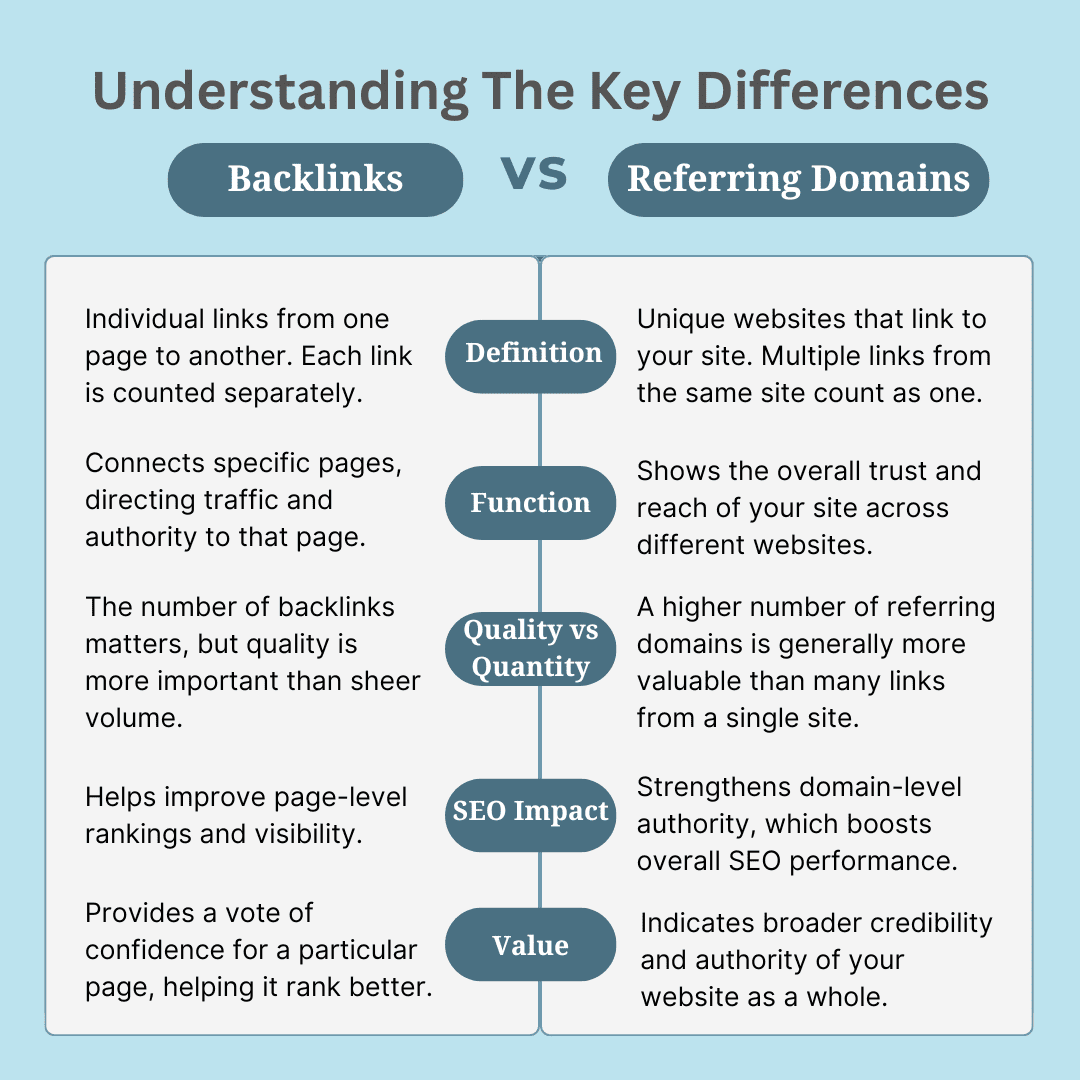
The Core Difference: Referring Domains vs Backlinks
It’s no surprise that many people confuse referring domains vs backlinks, with the difference in definitions between the two being slight. However, you cannot create a great SEO campaign if you don’t understand the key distinction.
You can think of the difference this way: the referring domain is like a phone number, and backlinks are the number of times you’ve gotten a call from that particular number.
Which One Matters More?
The answer is referring domains.
You can grow your backlink count, but it won’t move the needle much if you’re not also getting links from more unique websites. Here’s why:
- Trust and Authority: Each unique website that links to yours counts as a vote of confidence. Multiple backlinks from a single site to yours don’t stack that confidence higher. In Google’s eyes, a high number of referring domains is more valuable than a lot of backlinks, since it infers that a large number of unique domains find your website useful and credible.
- Power: One website linking to you 100 times doesn’t come close to the impact of having 100 different websites link to you once.
So instead of focusing on collecting as many backlinks as you can, your real goal should be to increase the number of unique sites pointing to your content.
Impact on SEO and Link Quality
Backlinks and referring domains both play a big role in SEO, since Google considers them major signals when deciding how to rank a site. A backlink works like a vote of confidence for your pages, and when those votes come from reputable sources, Google is more likely to trust and reward your site.
But with backlinks, the number isn’t what matters most anymore. Google now pays far more attention to the quality of the links you earn than to how many you have.
Factors That Determine Link Quality
Not all backlinks are created equal. Both backlinks and referring domains are higher quality if they meet certain criteria:
- Authority of the Website: A link from a website that Google considers very authoritative, like The Washington Post, will carry more weight than a link from a brand-new website. The website should have a high domain authority (DR), with a goal typically set at 50+ DR.
- Relevance of the Website: The website providing the link should be relevant to your own website and your niche market. A link from a page that matches your website’s topic carries far more value than a link coming from a page that is irrelevant to what you do.
- Anchor Text: Because search engines use this text to determine what a page will be about, it helps if the link includes descriptive anchor text, rather than a phrase like “click here.” Including a keyword in the anchor text can be powerful, but it’s easy to over-optimize.
- Traffic: For a link to be considered high quality, the referring domain should be a site that actually gets traffic.
Weak Link Profiles and Penalties
You also need to know how referring domains and backlinks work together when you’re running a backlink audit. If you see a very high number of backlinks but only a few referring domains, it usually means the link profile isn’t strong.
When a small group of sites sends an unusually large number of links to your pages, it can point to spammy link-building practices, like paid links or private blog networks.
Google may penalize you for this kind of profile, sometimes with a Manual Action penalty. Specifically, Google devalues links that are embedded in sidebars, footers, and headers that appear on every page of a domain.
On the other hand, Google looks at a large number of high-quality referring domains as a signal of an authoritative website.
How to Check Backlinks and Referring Domains
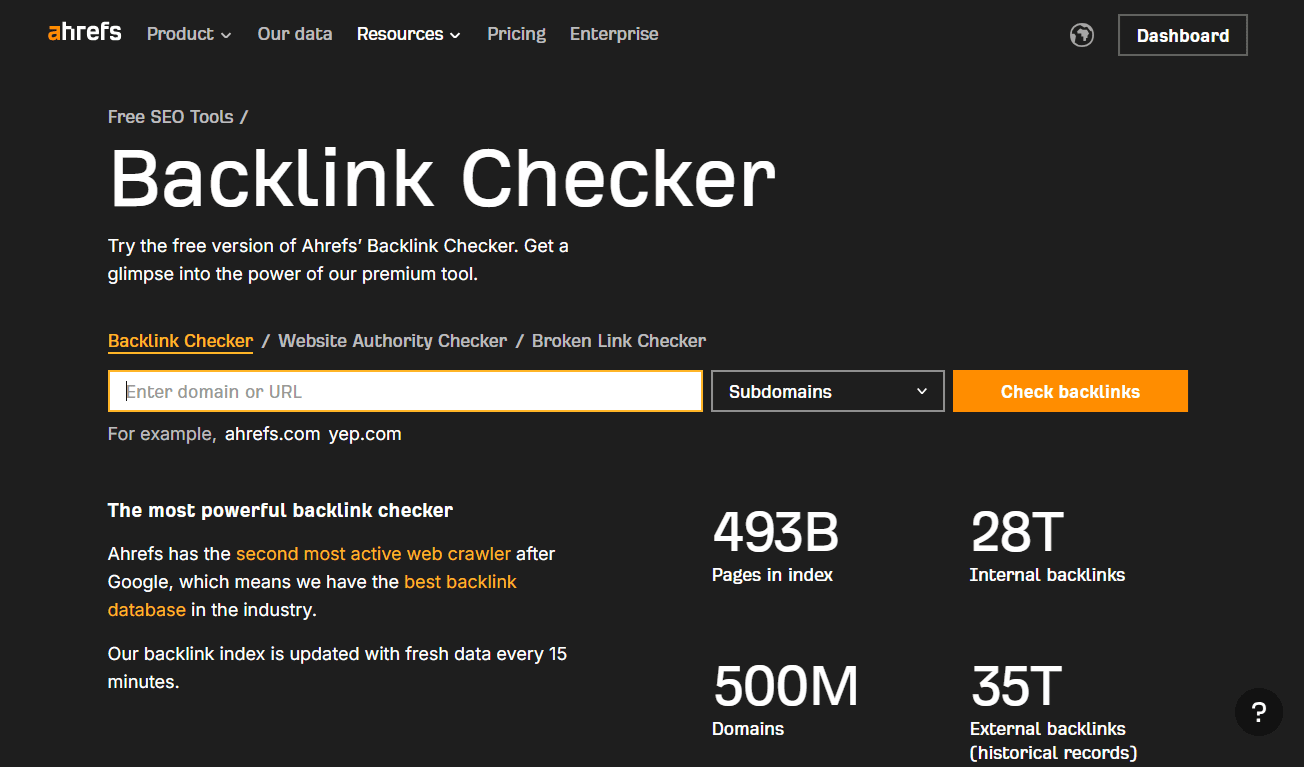
Ahrefs Backlink Checker
It’s easy to check your site’s referring domains and backlinks with a backlink checker. The first step is arming yourself with the right tools.
Recommended Tools
- Google Search Console (GSC): This free tool from Google lets you see important data about your site’s search traffic and overall performance. Inside GSC, you can check details about your backlinks, referring domains, the anchor text being used, and the pages on your site that those links point to.
- Ubersuggest: Simply visit the “Backlinks” tab of the tool to see how many backlinks and referring domains a site has. It also shows the Domain Authority (DA) of each backlink, referring domains won and lost, and a complete list of your backlinks.
- Ahrefs: This tool can check any website, URL, or subsection to show the number of backlinks and referring domains, Domain Rating (DR), URL Rating (UR), and Ahrefs Rank (AR).
- Majestic: This paid subscription tool provides data on the number of links and referring domains, as well as information on the trust and authority of websites’ backlinks and referring domains.
Removing Spammy Links
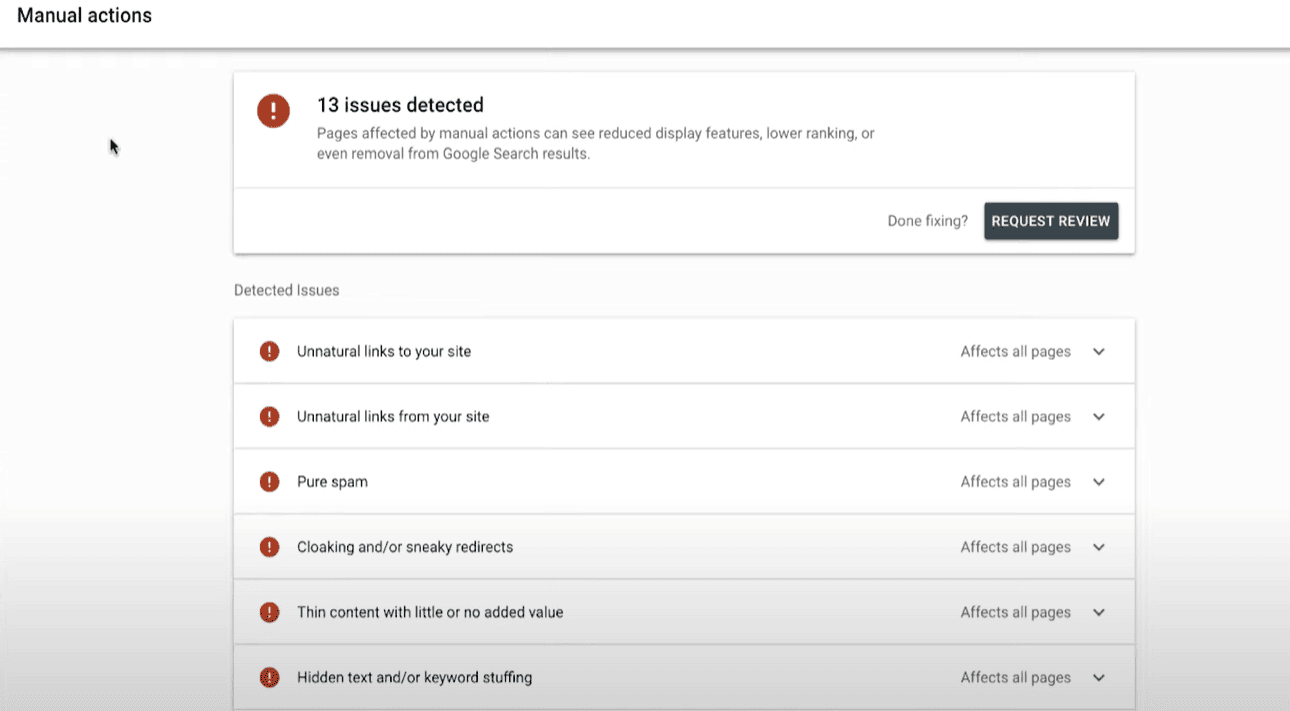
Removing spammy links via manual actions in Google Search Console
While scrolling through your list of backlinks, you may see spammy-looking backlinks you don’t want. If that’s the case, you can use Google’s Disavow Tool to remove these backlinks from your site.
We recommend you only disavow backlinks when you have a “manual action” or penalty in your Google Search Console instance.
Best Practices For Building Referring Domains and Backlinks
Want to get more backlinks and referring domains? Here are several strategies you can use to build a strong link profile:
1. Create Great Content
Creating strong, valuable content is one of the most reliable ways to gain new backlinks and referring domains over time. When your pages give readers something genuinely useful, help break down a tough topic, or offer solid data that supports someone’s point, other websites are much more likely to link to you on their own.
Whatever type of content you create, quality is key. It must be demonstrably better than the existing content on the first page of Google if you want to attract links.
Recommended content types that are great for generating insights and links include:
- Studies and surveys that generate insights and statistics
- Seriously in-depth guides and how-to posts
- Thought leadership pieces
- Round-up posts
- Infographics
You can also get free high-quality backlinks by repurposing your content. For example, you could turn a blog post into an infographic, a social media post, a video, or a podcast. This helps to strengthen your website’s SEO by gaining more exposure and links.
2. Guest Post on Other Sites
You don’t have to wait for websites to organically link to your site. Guest posting on high-quality websites is a great way to build backlinks and increase referring domains yourself.
When you write a guest blog, you will usually have the opportunity to include a link or two to your website in the main copy of the blog post. If not, you will almost certainly be able to link to your website in your author bio.
To find good-quality sites that accept guest posts, you can:
- Look at your competitors’ backlink profiles.
- Use Google search parameters, such as searching for intitle: “guest post” [your niche].
3. Manually Reach Out to Other Websites
You can contact any website and ask for a backlink, and this approach works even better when you have strong content to share. One popular method is the Skyscraper Technique, where you create a stronger, more useful version of an article that other sites are already linking to.
Then you reach out to those sites and show them your improved piece, and if they see the value, many will happily link to your content as well.
4. Create Infographics
Infographics are an effective way to earn strong backlinks while sharing information in a format that’s easy to look at and understand. You can pull together solid data from trusted sources and turn it into a clean, engaging design.
After you’ve created it, you can publish it on your own site or submit it to platforms like Visual.ly or Infographic Journal.
Conclusion
Hopefully, you now understand the difference between referring domains vs backlinks. Backlinks are the name for the links your website receives from other sites, while referring domains are the individual websites that do the linking.
You can get lots of backlinks from one website, but it will still only count as a single referring domain. Increasing both your site’s backlinks and referring domains is key to improving your rankings.
However, the number and quality of high-authority referring domains are the most powerful factors for Google. Focus on quality over quantity for a positive impact on your page rank.
Referring Domains Vs Backlinks FAQs
What is a referring domain?
A referring domain, or linking domain, is a unique website that links to your site. It represents the website that contains a backlink leading to another website. A website can only be counted as a single referring domain, no matter how many links it gives you. Google views referring domains as a sign of authority and trust, and the more high-quality referring domains your site has, the better its link profile.
What is the difference between referral traffic and backlinks?
A backlink is the hyperlink itself that points to your web pages from another web page. When someone clicks on that link, they are considered the referral traffic. A backlink will refer traffic and authority to your website, but it is not a referring domain. Certain types of links, such as Editorial backlinks, are typically designed to drive referral traffic rather than organic traffic.
How many referring domains are good?
The number of referring domains depends on their quality. Google looks at a large number of high-quality referring domains as a signal of an authoritative website. Acquiring a high number of quality backlinks takes time and effort, but it pays high SEO dividends in the long term.
Conversely, a large number of low-quality referring domains is a surefire way to put your site at risk of a Manual Action penalty from Google, as they can be interpreted as link spam.
Can I rank my website without backlinks?
Backlinks and referring domains play a major role in helping your pages rank well in search results. Research shows that about 90.63% of pages with zero backlinks get no organic traffic from Google at all. If strong, trustworthy sites aren’t linking to your pages, you risk missing out on valuable traffic, fewer engaged visitors, and potential sales.
What is the role of anchor text in SEO?
Anchor text is the words that contain the link. Search engines use this text to determine what a page will be about. It helps if the link includes descriptive anchor text, rather than a phrase like “click here.” Including a keyword in the anchor text can be particularly powerful, but it’s easy to over-optimize links.
What is considered a good Domain Authority (DR) for a referring domain?
Domain Authority (DR) is a metric that gauges how authoritative a website is. Backlinks from sites that Google sees as highly trustworthy carry more value. To be considered high-quality, a backlink should come from a referring domain with a strong Domain Authority, usually aiming for a DR of 50 or higher.