 DomCop
Finding recently expired domain names is a popular strategy for investors and business owners looking for an edge. These domains often come with existing traffic or high-quality backlinks that can save years of SEO work.
However, the process is not as simple as waiting for a timer to hit zero. Most recently expired domains go through a specific lifecycle before they ever become available to the general public. Without the right tools like DomCop to filter the noise, you might miss the best opportunities to competitors who use automation.
In this guide, we will explain how to find recently expired domains, how the expiration process works, and the best ways to secure a name before it disappears.
What Recently Expired Actually Means
When you see recently expired domain names, it is important to understand that the term describes a status rather than a purchase opportunity.
A domain labeled as “recently expired” has officially passed its renewal deadline, but the original owner still has a legal window to get it back. During this time, the domain is essentially in a holding pattern. It is no longer active on the web, but it hasn’t been released by the registry for new buyers to register.
This label shows that a domain has entered the expiration lifecycle. Many people make the mistake of thinking they can simply go to a registrar and buy these recently expired domains immediately. In reality, the domain is protected by a grace period. During this phase, the previous owner can pay a standard renewal fee to keep the name.
If you are using a tool like DomCop, you can see these names as they move through this phase, but you cannot own them until the registry officially “drops” them.
Understanding this distinction is the first step in finding recently expired domain names that are actually worth your time. It prevents you from wasting effort on names that the original owner is likely to renew at the last minute.
The Life Cycle of Recently Expired Domains
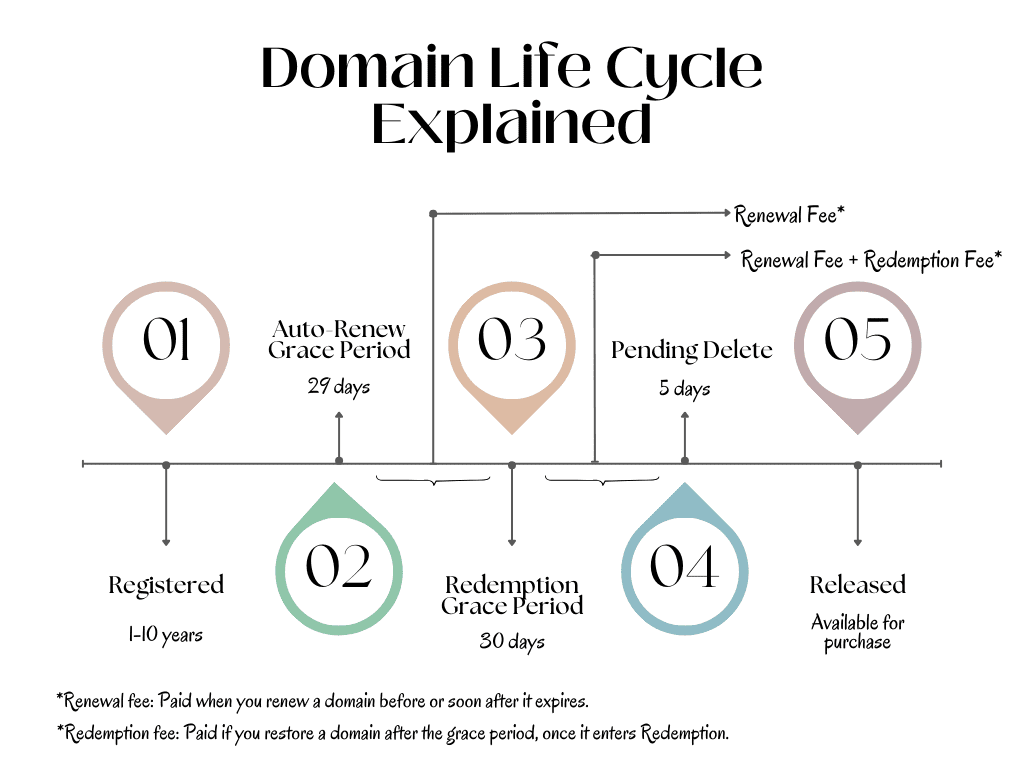
A domain does not just vanish once it hits its expiration date. Instead, it follows a strict path set by the registry. If you are looking for recently expired domain names, knowing this timeline is the only way to catch them before someone else does.
- The Grace Period (0–45 Days): Immediately after expiration, the domain enters a grace period. It stops working, but the original owner can still renew it at the standard price. Most .com and .net domains stay in this phase for about 30 days.
- The Redemption Period (30 Days): If the owner ignores the grace period, the domain moves into redemption. At this point, the owner can still reclaim it, but they have to pay a much higher “restore” fee.
- Pending Delete (5 Days): This is the final stage. The domain is now locked and cannot be renewed by anyone. It is strictly waiting to be purged from the registry’s database.
- The Drop: Once the 5 days are up, the domain is “dropped” and becomes available for public registration.
Tracking recently expired domains through these stages is much easier with a tool like DomCop. It lets you see exactly which phase a domain is in, so you can decide whether it is worth waiting for or if you should look for a different opportunity.
Where to Find Recently Expired Domains
You will not find the best recently expired domain names by simply browsing a standard registrar’s search bar. High-value names are usually claimed long before they reach that stage. To find quality opportunities, you need to look where the data is aggregated and filtered.
Platforms like DomCop are designed specifically for this purpose. Instead of manually checking thousands of names, you can use specialized lists to see what is happening in real time:
- The Expiring Section: This list shows domains that are currently in auction or labeled as “pending delete.” It is the best place to find domains before they officially drop.
- The Expired Section: This contains recently expired domains that have dropped in the last 30 days. These names are frequently checked for availability, making them easier to claim if they aren’t already taken.
- The Archive: This is a massive database of domains that expired more than 30 days ago and are currently available for registration.
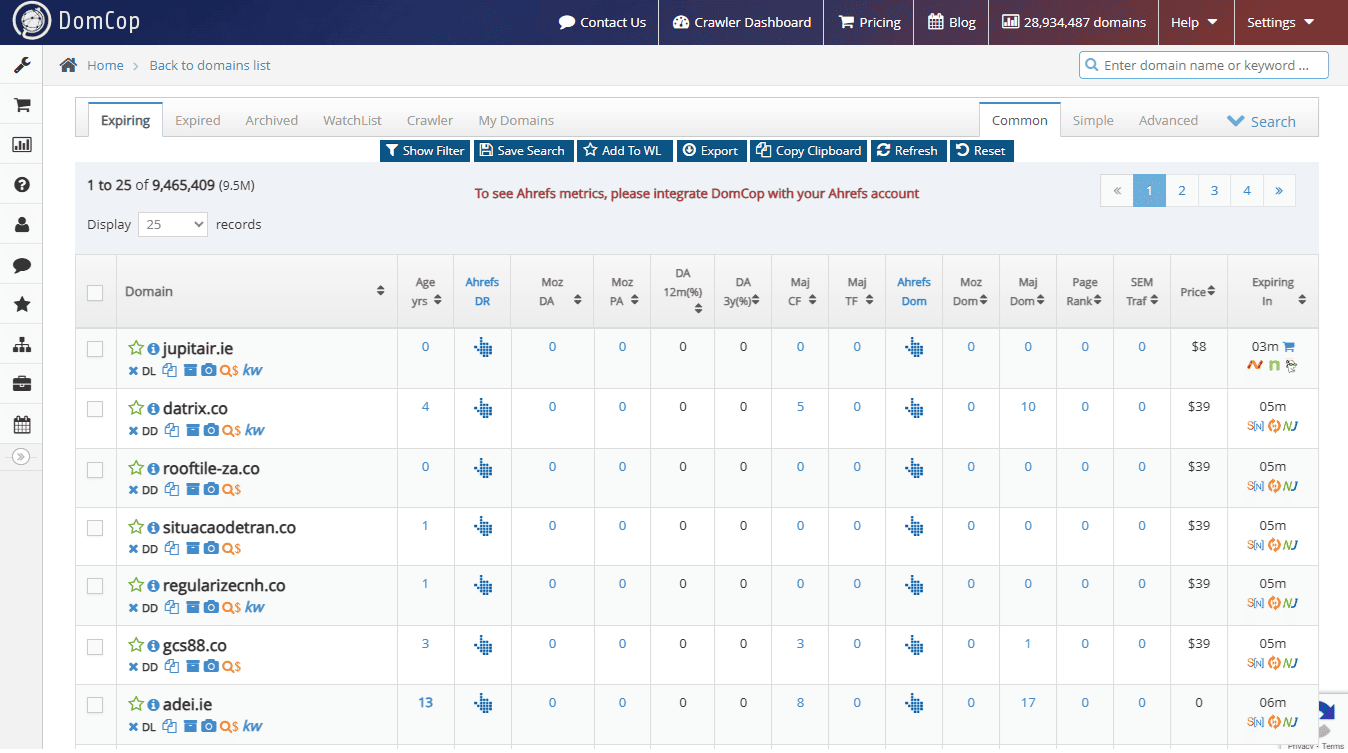
Using a dedicated tool allows you to filter these recently expired domain names by metrics like Domain Authority (DA) or Trust Flow (TF). This guarantees you aren’t just finding any name, but one that has the SEO power to help your project.
How to Successfully Acquire a Dropped Domain
Even if you find perfect recently expired domain names, there is no guarantee you will be able to register them. For high-value names, the competition is intense. If you wait until the domain is officially available to try a manual registration, you will likely lose to automated bots.
To successfully acquire recently expired domains, you should follow these steps:
Place a Backorder Early
If a domain completes the redemption period without being renewed or sold at auction, it moves toward the “drop.” At this point, you should place a backorder. This is essentially an automated request that tells a service to try and register the domain, the exact millisecond the registry releases it.
Since human speed cannot compete with bots, a backorder is the only reliable way to catch recently expired domains at the moment of deletion.
Use Multiple Services
No single service catches every domain. To increase your odds, you can place backorders on multiple platforms. Most services only charge you if they are successful in catching the name.
Prepare for Private Auctions
Many registrars have partnerships with auction houses. If a domain is highly sought after, it will likely go to an “expiry auction” before it ever drops. This is the best chance to buy. You will need to monitor these auctions closely, as the highest bidder wins the right to the name once the redemption period ends.
Set a Strict Budget
It is easy to get caught up in a bidding war. Use DomCop to check the domain’s metrics and determine its actual value before the auction begins. This helps you walk away if the price exceeds the domain’s potential return on investment.
Common Mistakes to Avoid When Finding Recently Expired Domains
Finding recently expired domain names can be highly rewarding, but it is easy to make a mistake that costs you money or legal trouble. Beginners often rush into a purchase without doing their homework. Here are the most common pitfalls to watch out for:
- Ignoring Trademark Issues: Just because a domain is one of the recently expired domains on a list doesn’t mean it is safe to use. If the name contains a trademarked brand (like “https://www.google.com/search?q=NikeShoesShop.com”), the original company can legally take it from you later. Always run a quick trademark search before committing to a name.
- Failing to Check for SEO Spam: Many domains expire because they were used for “black hat” SEO or spamming. If a domain was previously banned by Google, buying it won’t help your rankings. Use a tool like DomCop to check the domain’s history and backlink profile to ensure it has a clean record.
- Waiting for Manual Registration: As mentioned before, the best recently expired domain names are snatched up by bots in milliseconds. If you wait until you see the domain listed as “Available” on a standard registrar, you have likely already lost it to a professional “drop catcher.”
- Not Checking the Backlink Quality: Don’t just look at the number of backlinks; look at the quality. A domain might have thousands of links, but if they all come from low-quality, irrelevant sites, they could actually hurt your reputation.
Advanced Strategies for Filtering Domains
Finding recently expired domain names is way more effective when you know how to filter out the noise. Thousands of domains drop every day, but many of them are just random strings of characters or gibberish. To find the real gems, you can apply specific search criteria that professional investors use:
- Filter by Keyword and Location: If you are building a niche site, search for recently expired domains that start with your industry (e.g., “Doctor” or “Plumber”) or include your city (e.g., “Tampa”). This helps you find domains with local relevance and existing targeted traffic.
- Set Character Limits: Shorter domains are generally more valuable and easier for users to remember. Try filtering for domains that are under 15 characters to avoid long, clunky names.
- Remove Hyphens and Numbers: Most high-quality brandable domains do not contain hyphens or random numbers. Filtering these out immediately cleans up your list and leaves you with professional-looking options.
- Look for “English Words Only”: Many automated tools allow you to filter out domains that contain numbers or hyphens. This ensures the recently expired domain names you find are brandable and professional.
- Check the “Birth Year”: A domain that has been registered since the late 90s or early 2000s often carries more authority. You can use the Wayback Machine to see what the site looked like years ago and ensure it has a long, clean history.
- Focus on the TLD: While there are many new extensions, .com remains the gold standard. You can filter your results to only show .com domains that have recently expired. Doing this confirms you are investing in the most liquid and recognizable extension.
- Monitor Different Auction Types: Beyond the standard drop, keep an eye on “Pre-Release” auctions at places like NameJet or GoDaddy. These are exclusive opportunities to bid on domains before they are released back to the general public.
Conclusion
Recently expired domains are web addresses that have passed their renewal deadline but haven’t been released back to the public yet. Investors and business owners want these domains because they often come with existing authority, aged backlinks, and leftover traffic that can jumpstart SEO efforts.
Success in claiming them depends on knowing exactly where they sit in the expiration cycle. DomCop provides the tools to monitor these names in real-time, allowing you to filter by quality metrics and secure high-value assets before they hit the open market.
Recently Expired Domains FAQs
Where can I find recently expired domains?
You can find them on dedicated search platforms like DomCop and ExpiredDomains.net, or through registrar auction sites like GoDaddy Auctions and NameJet. These tools aggregate thousands of listings, allowing you to filter by SEO metrics and niche.
How to buy a recently expired domain?
The most effective way is to place a backorder while the domain is in its “Pending Delete” phase or bid on it during a registrar auction. If the domain has already fully dropped and is available, you can register it through any standard domain registrar.
Can I buy an expired domain name?
Yes, but you usually have to wait until it completes the redemption and “Pending Delete” phases unless you buy it through a private auction. Once it is officially released by the registry, it becomes available for anyone to purchase.
How to check the domain expiry date?
You can use a WHOIS lookup tool or the ICANN registration data lookup to see the “Registry Expiry Date.” If you already own the domain, the simplest way is to check the “My Domains” section within your registrar account.
How to retrieve an expired domain name?
If you are the original owner, you can typically renew it for a standard fee during the grace period (0–45 days). If it enters the redemption period, you can still retrieve it by paying a significantly higher restoration fee through your registrar.
How to find a list of expired domains?
You can access real-time lists on DomCop, which categorizes domains into “Expiring,” “Expired,” and “Archive” sections. These lists allow you to sort by backlink profile, age, and keyword relevance to find high-value names quickly.