 DomCop
In the world of physical real estate, the mantra is “location, location, location.” In the digital world, that location is your domain name. Expired domain investing is the practice of buying web addresses that the previous owners did not renew.
Thousands of domains expire every day. While many are not worth much, some are hidden gems with existing traffic and years of history.
In this guide to expired domain investing, you will learn how to find these valuable names and navigate the markets where they are sold. Instead of starting a brand new website with no reputation, you are buying an asset that already has a head start.
What is Expired Domain Investing?
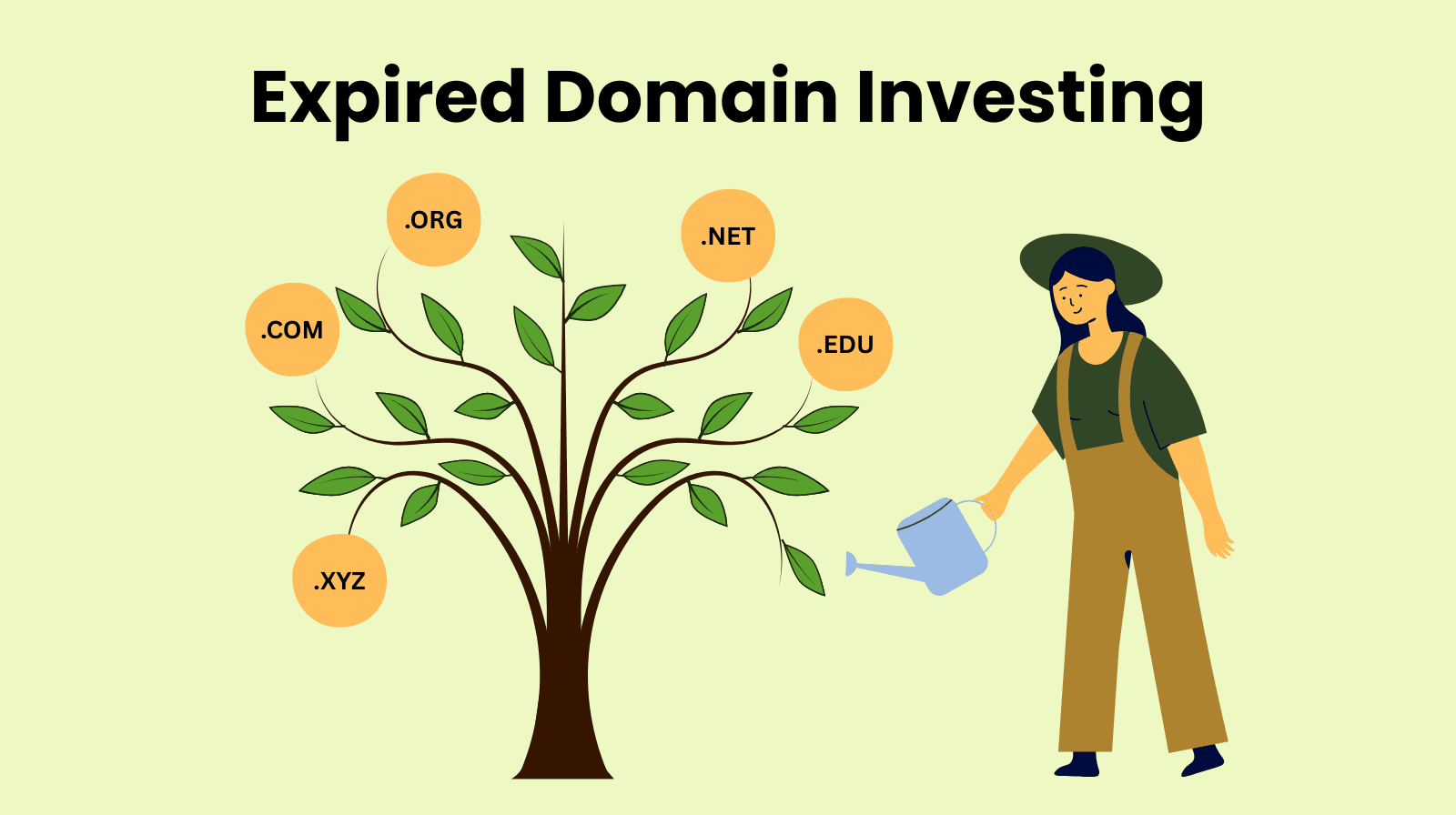
Domain investing is the process of buying web addresses with the goal of selling them later for a higher price. Think of it like buying a piece of land in a growing town. You buy the digital land today, wait for its value to go up, and then find a buyer who needs it for their business or project.
When you invest in domains, you are not just buying a string of letters. You are buying a brand, a shortcut for customers to find a service, or a tool that helps a website show up higher in search results. Some investors buy names that are short and easy to remember, while others look for names that already have a history of visitors.
Who are Domain Investors?
Domain investors, often called “domainers,” come from many different backgrounds. Some are individuals looking for a side business, while others are large companies that manage thousands of names.
- The Flippers: These investors look for undervalued names and try to sell them quickly to a business that needs that specific brand.
- The SEO Experts: These people use expired domain investing to acquire the authority a site built up over the years. This helps their new content rank faster on search engines.
- The Branders: These investors focus on “catchy” or “dictionary” words. They bet on the fact that a startup will eventually want a professional and simple name like “Coffee.com” or “https://www.google.com/search?q=FastPay.com.”
Why Invest in Expired Domains?
When you register a brand-new domain name, you are starting from a blank slate. Search engines do not know who you are, and no other websites are talking about you. Expired domains differ because they already have a digital footprint in place.
Here is why expired domain investing is so valuable:
1. Existing Search Engine Authority
Search engines like Google tend to trust older domains that have been around for a long time. An expired domain often has backlinks, which are links from other websites pointing to it. All these links act like votes of confidence.
If a domain was previously owned by a reputable news site or a popular blog, it keeps the authority from those links even after it expires. This allows a new owner to rank for keywords much faster than they could with a brand-new name.
2. Immediate Website Traffic
Some expired domains still get visitors every day. This happens because people have the site bookmarked or because the domain is still linked in old articles and social media posts.
When you buy an expired domain that still has traffic, you can instantly send those visitors to a new product or service. This “type-in” traffic is a rare asset that saves you money on advertising.
3. Saving Time and Money
Building a website’s reputation from scratch can take months or even years of hard work and expensive marketing. By investing in an expired domain, you are essentially buying time. You skip the new site phase, where search engines are hesitant to show your content. For a business, this head start can be worth thousands of dollars in saved marketing costs.
4. Holding High-Value Keywords
Many of the best domain names were registered 20 or 30 years ago. Today, almost every common dictionary word is already taken. The only way to get your hands on a short, powerful, keyword-rich domain is to wait for it to expire or buy it from an auction. These names are easy to remember and give a business instant credibility in its industry.
Expired Domain Market vs. Aged Domain Market
While ‘expired’ and ‘aged’ are usually used in the same sense, they represent two different ways to buy digital assets. Understanding the difference is essential to knowing how much to pay and what kind of risk you are taking.
The Expired Domain Market
These are domains that the owner forgot to renew or chose to abandon. Once the grace period ends, these names are sold in quick auctions or grabbed by automated tools. Think of this as a foreclosure auction. You might get a great deal, but you have to act fast before someone else snaps it up.
The main risk here is that since the domain technically lapsed, it might have a messy history. You have to check if the previous owner used it for spam.
For example, a local bakery called https://www.google.com/search?q=GreenValleyBread.com closes down and forgets to pay its renewal fee. The domain expires, and an investor buys it at auction for $200 because it still has links from local food bloggers and news sites.
The Aged Domain Market
The aged market consists of domains that have been registered continuously for years and have never lapsed. These are usually held by investors or businesses that know their value and have kept the registration active since day one. This is like buying prime real estate on a main street. The ownership chain is unbroken, which search engines find very trustworthy.
These domains are often more expensive because they are cleaner and have a stable reputation. For example, an investor registered TravelTips.com in 1998 and has paid the renewal fee every year for decades. They have never let it expire.
If you want to buy it today, you would likely pay a premium price, perhaps thousands of dollars, because of its age and perfect history.
Key Differences
The expired market offers more opportunities to find a bargain, but it requires more research to ensure the domain is healthy. The aged market is for those with a higher budget who want a stable asset with a long, uninterrupted history.
While expired domains are often bought through bidding in drop auctions, aged domains are typically acquired through private negotiations or premium marketplaces. Learn more differences in our guide: Expired Vs Aged Domains.
Evaluating Value: Key Metrics for High-Quality Domains
Not every old domain is worth your money. In successful expired domain investing, you must look past the age of the name and examine the data behind it. Buying a domain without checking its history is like buying a used car without looking under the hood.
Here are the most important factors to check before you place a bid.
Backlink Profile Audit
A backlink is when another website links to your domain. This is the primary reason expired domains have value.
However, quality matters more than quantity. A domain with ten links from respected websites like the New York Times or a major university is worth much more than a domain with thousands of links from low-quality, spammy sites. You should use tools to see who is linking to the domain and ensure those links are relevant to the topic.
Historical Integrity
You must verify what the website looked like in the past. Sometimes, a domain that originally belonged to a legitimate business was bought by a spammer who used it to sell fake products or post low-quality content. If a domain has a dirty history, search engines may have already penalized it.
You can use the Wayback Machine to see snapshots of the site from previous years. If you see the site suddenly changed from a “Doctor’s Office” to a “Gambling Site,” that is a major red flag.
Search Engine Status
A valuable domain should still be indexed by search engines. This means that if you search for the specific domain name on Google, it actually shows up in the results. If a domain is not showing up, it may be blacklisted.
A blacklisted domain is almost worthless for SEO purposes because search engines have decided to hide it from users. Make sure to check the index status before finalizing your purchase.
Commercial Appeal and TLD
The “TLD” is the top-level domain, such as .com, .org, or .net. For most investors, .com is the gold standard because it is what people naturally type into their browser. Beyond the extension, consider the length and the keywords.
A name like “https://www.google.com/search?q=BostonLawyer.com” has high commercial appeal because it is easy to remember and describes a specific, high-paying industry. Names that are short, easy to spell, and free of hyphens always command a higher price in the market.
Acquisition Strategies: How to Secure the Best Domain Names
Finding a great domain is only part of the job; you also need a strategy to succeed in expired domain investing. Because valuable domains are in high demand, investors use specialized platforms and automated tools to secure them.
Depending on where the domain is in its lifecycle, you will use one of the following methods.
Auction Participation
Most major registrars do not let valuable domains simply disappear. Instead, they move them into an internal auction as the expiration date approaches.
For example, sites like GoDaddy Auctions or Dynadot allow you to bid on names that are about to lapse. If you are the highest bidder, the domain is transferred to your account.
This is often a preferred way to buy because the registration remains continuous, which helps preserve the domain’s reputation with search engines.
Drop-Catching Services
If a domain is not sold at a registrar auction, it eventually enters a “Pending Delete” status. At this point, it is about to be released back to the public for anyone to register. Because this happens in milliseconds, humans cannot compete manually. This is where drop-catching services come in.
Services like DropCatch and NameJet use powerful servers to try to register the domain the exact moment it becomes available. You place a backorder on the name you want. If the service successfully grabs it for you, you pay the fee. If multiple people want the same name, it usually leads to a private auction among those bidders.
Advanced Research and Filtering Tools
With millions of domains expiring, you need a way to sort the gems from the noise. This is where research platforms become essential for saving time and avoiding bad investments.
- Domcop: This is a very popular tool for investors who want a one-stop shop for data. Domcop monitors millions of domains that are expiring or have expired from various auctions and marketplaces. It provides important metrics, such as Domain Authority and Trust Flow, right in the search results.
- ExpiredDomains.net: This massive database lets you apply hundreds of filters. You can search for domains that have a specific number of backlinks, are a certain age, or contain specific keywords.
- SpamZilla: This tool focuses on cleanliness. It automatically checks domains for past spam or previous redirects. It helps you avoid names that might have a hidden penalty from search engines.
Monetization: Turning Domains into Profit
Buying a domain is an investment, but the profit only comes when you put that asset to work. Successful investors typically use one of four main strategies to generate a return on their purchase.
1. The Direct Resale (Domain Flipping)
The simplest way to profit in expired domain investing is to buy a domain cheaply and sell it at a high price to an end user, a business, or a person who specifically needs that name. This is known as Domain Flipping.
- Example: You buy a domain like “https://www.google.com/search?q=NewYorkAutoGlass.com” at an auction for $100. You then reach out to glass repair shops in New York who are currently using longer, harder-to-remember names. You might sell it to them for $1,000 because of its perfect keyword match and professional feel.
2. Building an Authority Site
Instead of selling the domain, you can use its existing power to build a new business. Because the domain already has history and backlinks, you can skip the months of waiting for search engines to trust you.
- Example: If you buy an expired domain that previously belonged to a popular fitness blog, you can start posting new workout articles immediately. Tools like Domcop are excellent here because they show you exactly which domains have the highest “Trust Flow.” By starting with a domain that already has a reputation, your new articles will likely rank on the first page of search results much faster than if you used a brand-new name.
3. The 301 Redirect
This is a technical strategy used to boost an existing website. You point the expired domain to your current site. This tells search engines that all the authority and “link juice” from the old domain now belongs to your new one.
- Example: You own a coffee equipment store. You find an expired domain for a famous coffee review site that went out of business. By redirecting that domain to your store, your shop inherits the votes of confidence from all the sites that used to link to the review blog. This can result in a massive jump in your search engine rankings.
4. Domain Parking
If you aren’t ready to build a site or sell it yet, you can park the domain. This involves placing a simple temporary page on the URL that displays relevant ads.
- Example: If you own a domain that still gets 500 visitors a day from old links, parking it allows you to earn a small commission every time one of those visitors clicks an ad. While this rarely brings in as much as a sale or a full website, it is a completely passive way to cover your renewal fees while you wait for the right buyer.
Risk Management: Avoiding Costly Mistakes
Investing in expired domains can be highly profitable, but it is not without hazards. Many beginners lose money by rushing into auctions without doing proper research. To protect your capital, you must be aware of the common mistakes in the industry.
Trademark Landmines
This is the most dangerous mistake an investor can make. Just because a domain is available for purchase does not mean it is legal to own. If you buy a domain that contains a trademarked brand name, like “https://www.google.com/search?q=BuyNikeShoes.com” or “FacebookSupport.net,” you are asking for legal trouble.
The trademark owner can file a UDRP (Uniform Domain-Name Dispute-Resolution Policy) claim against you. In most cases, you will be forced to hand over the domain for free, and you will lose the money you spent at auction. Always search trademark databases before buying a name that sounds like a known brand.
Artificial or Inflated Metrics
Some sellers prime a domain for auction by using dishonest tactics to make it look more valuable than it is. They might use automated software to create thousands of fake, temporary backlinks that inflate the domain’s authority score.
To the untrained eye, the domain looks like an SEO powerhouse. However, once you buy it, those fake links often disappear or get flagged by search engines, causing the domain’s value to crash. Always look at the quality of the referring websites, not just the total number of links.
The De-indexed Trap
Sometimes, a domain expires because Google banned it for violating its rules. If a site is caught using aggressive spam, it might be de-indexed, meaning it will never show up in search results, no matter how much content you write.
Before you buy, perform a site search by typing site:example.com into Google. If no results appear, the domain might be blacklisted. Buying a blacklisted domain for SEO purposes is like buying a car that is permanently banned from every road. It might look nice, but it won’t take you anywhere.
Emotional Overbidding
Domain auctions are designed to be high-pressure environments. It is easy to get caught up in a bidding war and pay $500 for a domain that is only worth $50.
Before you enter an auction, set a strict maximum budget based on the domain’s potential return. If the price goes over your limit, walk away. There will always be more domains expiring tomorrow.
Conclusion
Expired domain investing is a way to acquire assets that already have a digital history. While the potential for profit is high, success depends entirely on your ability to separate valuable names from junk.
Use tools like Domcop to check the data, verify the history to avoid spam, and stay away from trademarked names.
If you focus on quality over quantity and stick to a budget, these digital properties can become a reliable part of your portfolio. Start small, do your research, and wait for the right opportunity to buy.
Expired Domain Investing FAQs
Are there risks with buying expired domains?
Yes, the primary risks include inheriting search engine penalties from the previous owner, trademark infringement, and “hidden” spam history. Always perform due diligence using tools like the Wayback Machine and backlink checkers to ensure the domain is clean.
How to make money from expired domains?
You can profit by reselling the domain to a business (flipping), building a new website that ranks faster due to the domain’s history, or redirecting its authority to boost an existing site. Some investors also park domains to earn passive ad revenue from residual traffic.
Is domain flipping illegal?
Domain flipping is a perfectly legal business, similar to real estate investing. It only becomes illegal cybersquatting if you intentionally register trademarked names in bad faith to extort money from the original brand owner.
Can I buy an expired domain?
Yes, anyone can buy an expired domain after its grace period ends and it enters a public auction or the pending delete phase. You can secure these names through auction sites like GoDaddy Auctions or by using drop-catching services like NameJet.