 DomCop
Choosing the right domain is an important step in any digital strategy, but not all used domains are created equal. If you are looking to skip the sandbox period and gain an immediate SEO advantage, you have likely come across two terms: Expired Domains and Deleted Domains.
While they might sound like the same thing, they sit at different stages of the domain lifecycle. Understanding these nuances is the difference between snagging a high-authority asset and wasting money on a clean slate that has lost its power.
This guide breaks down everything you need to know about expired domains vs. deleted domains.
What is an Expired Domain?
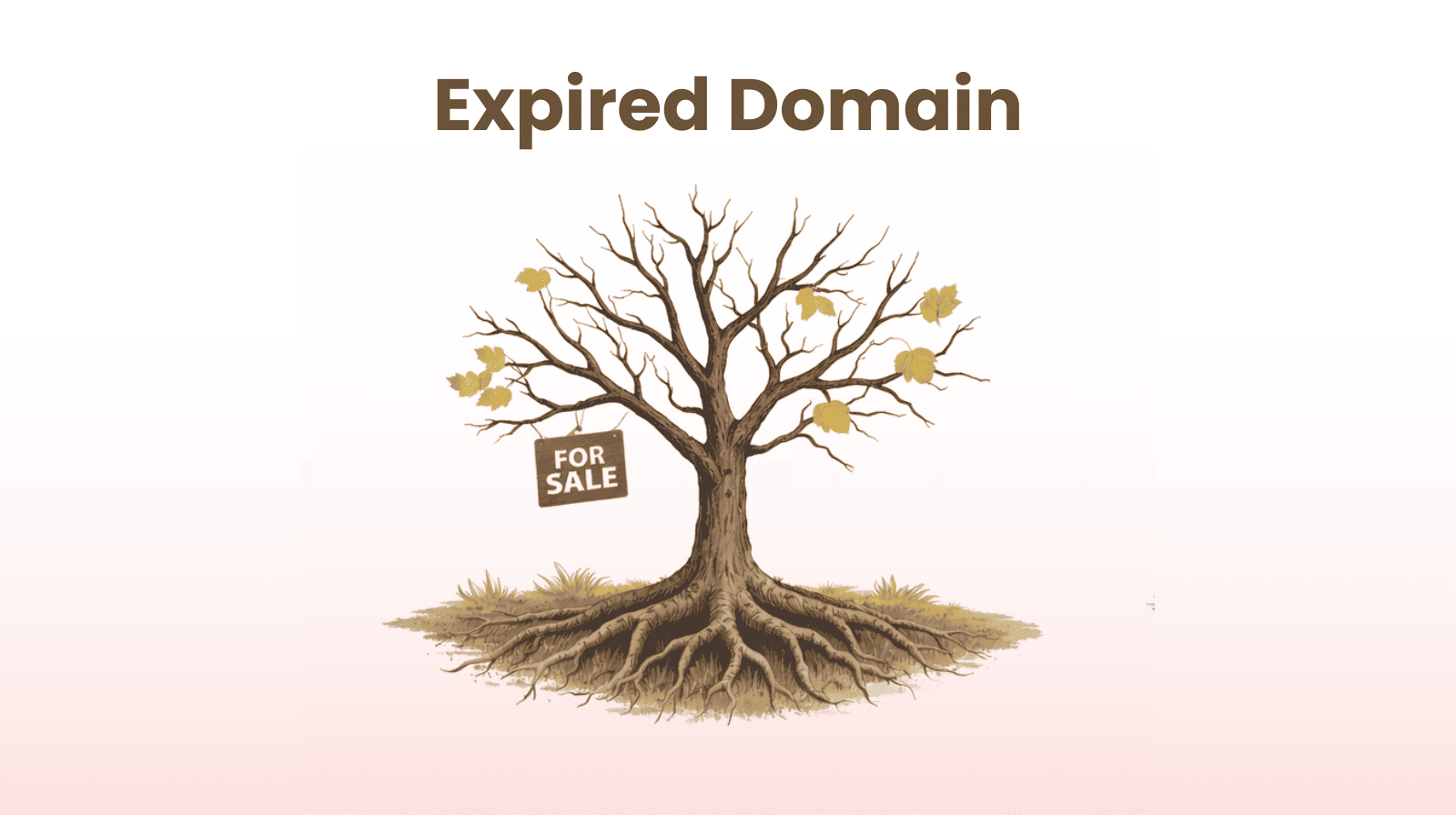
An expired domain is a domain name that has reached its registration end date but has not yet been fully released back to the general public.
When a domain expires, it enters a holding pattern managed by the registrar. During this time, the original owner usually has a Grace Period (typically 30–45 days) to renew it at a standard price. If they don’t, it moves into a Redemption Period, where it can still be recovered but at a much higher cost.
In the world of SEO and domain flipping, an expired domain is one that is currently in these middle stages, often sitting in expired domain auctions. Investors bid on these because they still carry their original age, backlink profile, and authority.
What is a Deleted Domain?
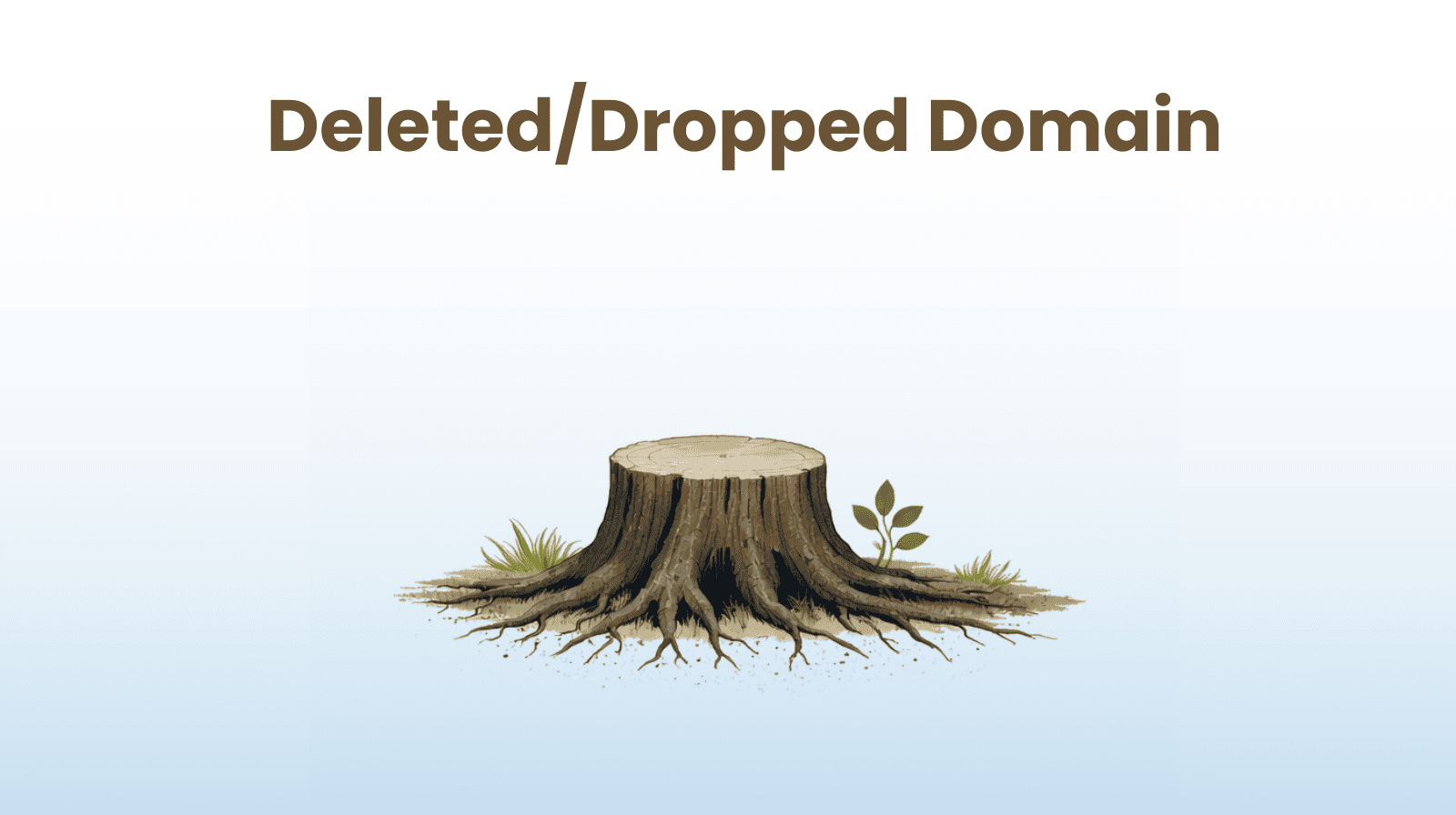
A deleted domain (also known as a Dropped Domain) is a domain that has completed the entire expiration lifecycle without being renewed or purchased at auction.
After the redemption period ends, the domain enters a 5-day Pending Delete phase. Once those five days are up, the registry completely wipes the record. The domain is then dropped and becomes available for anyone to register as if it were brand new.
Unlike an expired domain bought at auction, a deleted domain is technically a fresh registration. While it may still have some old backlinks pointing to it, the continuous registration history is broken, and search engines may treat it as a reset asset.
Comparison of Expired Domains vs. Deleted Domains
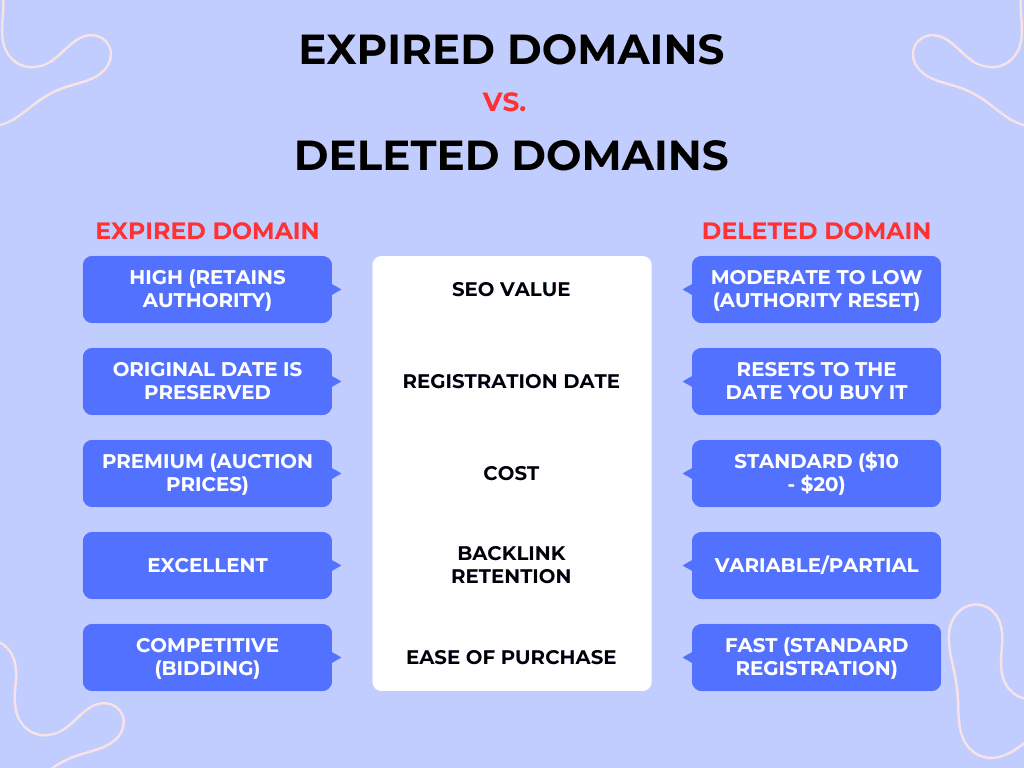
While the terms are often used interchangeably, they represent two different levels of freshness in the eyes of search engines. Here is a detailed breakdown of how expired domains vs. deleted domains compare across five key metrics.
1. SEO Authority and Link Equity
- Expired Domains: These are the gold standard for SEO. Because the domain is usually purchased at auction before it is fully deleted, the registration history remains continuous. The link juice from previous high-authority backlinks (like those from news sites or university blogs) remains intact, giving you an immediate head start in rankings.
- Deleted Domains: Once a domain is deleted, Google often resets its authority. While the physical backlinks from other websites still exist, the break in registration signals to search engines that the previous entity is gone. You may still get some value, but it is rarely as powerful as a non-deleted expired domain.
2. Registration History
- Expired Domains: The registration date often stays the same (e.g., “Registered since 2012”). This domain age is a trust signal for search engines.
- Deleted Domains: The clock resets. When you register a deleted domain, your WHOIS record will show a new “Created Date” for the current year. To the internet, you are starting a brand-new journey.
3. Price and Competition
- Expired Domains: High-quality expired domains are sold through auctions (like GoDaddy Auctions or NameJet). Because of their SEO value, they can be very expensive, ranging from $100 to tens of thousands of dollars.
- Deleted Domains: Since these have been released back to the public pool, you can register them at standard registration prices (usually $10–$20). The catch? The best ones are usually sniped by drop-catching services before a regular user can get them.
4. Risk of Penalties
- Expired Domains: These come with a higher risk. If the previous owner used the site for spam or received a manual Google penalty, you inherit that bad blood. You must check the domain’s history using tools like the Wayback Machine.
- Deleted Domains: These are usually low-risk domains. Because the domain has been wiped and reset, you are less likely to be held accountable for the previous owner’s mistakes, though a history of severe abuse can still linger.
5. Acquisition Process
- Expired Domains: You must participate in a bidding war during the Grace or Redemption periods. If you win, the domain is transferred to your account.
- Deleted Domains: You wait for the domain to pass the Pending Delete phase (usually 5 days). Once it hits the “Drop,” it is first-come, first-served. Better hurry if you want to grab these.
Benefits of Buying Expired Domains
Buying an expired domain at auction is often compared to buying a renovated house rather than building one from scratch. You are paying a premium for the foundation that has already been laid. Here are the primary benefits in detail:
1. Skipping the Google Sandbox
Brand-new domains go through a sandbox period where Google is hesitant to rank them, regardless of how good the content is. Search engines need time to build trust with a new entity.
Expired domains have already passed this test. Because they have a history of being indexed and active, you can often start ranking for competitive keywords much faster than with a fresh domain.
2. Inheriting an Established Backlink Profile
This is the single biggest reason investors buy expired domains. Backlink building is the hardest and most expensive part of SEO. When you buy an expired domain, you inherit all the “votes of confidence” (links) it earned over the years from:
- High-authority news sites (e.g., NYTimes, BBC)
- Educational institutions (.edu) or government sites (.gov)
- Niche-relevant blogs and directories
Instead of spending thousands of dollars on a guest posting campaign, you get a pre-built network of authority the moment the domain is transferred to you.
3. Immediate Domain Authority (DA) and Trust
A domain’s age is a significant trust signal. A domain registered in 2010 that has consistently hosted content is viewed as more stable and reputable than one registered yesterday. This historical trust helps your new content get crawled and indexed by search engine bots almost instantly.
4. Existing Residual Traffic
Many expired domains still have ghost traffic (visitors who click on old bookmarks or find old links in existing articles across the web). So, suppose you buy an expired domain in the fitness niche and set up a fitness blog. You may see immediate visitors from day one without spending a cent on advertising.
5. High Resale Value (Domain Flipping)
Expired domains are digital real estate. Savvy investors buy these domains at auction for a few hundred dollars, hold them, or build a simple starter site on them to prove their ranking potential, and then flip them for a significant profit.
You can read our guide on Domain Flipping to learn how to make money with expired domains.
Benefits of Buying Deleted Domains
While expired domains are often touted as the premium choice, deleted domains (or dropped domains) offer unique advantages, especially for budget-conscious marketers and those looking for a safer long-term play.
1. Cost-Effectiveness
The most immediate benefit is the price. While high-quality expired domains can cost hundreds or thousands of dollars at auction, deleted domains have returned to the general pool. This means you can register them at standard registration rates (typically $10–$20).
If you have a sharp eye for research, you can find gems that others missed for the price of a coffee and lunch.
2. A “Clean Slate” with Minimal Risks
When a domain is fully deleted, its previous ownership record is technically wiped from the registry. This reset can be a major advantage if the previous owner was involved in questionable activities.
- Manual Actions: While not guaranteed, a deleted domain is less likely to carry over a manual “spam” penalty than an expired domain purchased mid-lifecycle.
- No “Baggage”: You start fresh without the immediate pressure of maintaining the previous owner’s exact brand or niche to keep the link juice flowing.
3. Lower Competition
Domain auctions are highly competitive and often dominated by professional flippers with deep pockets. Deleted domains, however, are often overlooked. By the time a domain is deleted, many auction hunters have moved on to the next big bidding war.
This gives individual bloggers and small business owners a better chance to snag a great name without a bidding war.
4. Niche-Relevant Naming
Often, people let domains go simply because they closed their business or lost interest, not because the domain was bad. You can find incredible, keyword-rich names that were once active websites. Even if the SEO authority has dipped, the brandability and keyword relevance of the name itself remain high-value assets for your new project.
5. Access via Drop Catching
If you identify a domain that is about to be deleted, you can use a drop-catching service. These services use automated scripts to register the domain the moment it becomes available. This is often cheaper than a public auction and guarantees you get the domain as soon as it becomes available.
How to Find Expired and Deleted Domains
Finding a high-value domain manually is like looking for a needle in a haystack. Thousands of domains expire every hour, and sorting through them requires the right tools. Let’s see how you can find expired domains vs deleted domains:
1. Using Domain Auction Houses
For expired domains, the most common route is through registrar auctions. Sites like GoDaddy Auctions, NameJet, and SnapNames list domains that have moved past their grace periods. You can bid on these alongside other investors.
2. Backordering (Drop Catching)
If you have your eye on a domain that is about to be deleted, you can place a backorder. Services like DropCatch or Dynadot will use automated systems to try to register the domain the exact second the registry releases it.
3. Using Advanced Tools (DomCop)
The most efficient way to find both expired and deleted domains is by using a specialised search engine like DomCop. Instead of visiting ten different auction sites, DomCop aggregates millions of domains into one dashboard.
- Why use DomCop? It provides instant SEO metrics for every domain, including Moz Domain Authority (DA), Majestic Trust Flow (TF), and even estimated traffic.
- Powerful Filtering: You can filter by Pending Delete to find domains about to drop, or “Expired” to see what is currently in auction.
- The Guru Plan Crawler: For serious SEOs, DomCop’s Guru plan actually crawls the web for you to find hidden expired domains, those that have broken links from high-authority sites but aren’t listed on public auction boards yet.
How to Evaluate Domain Quality
Buying a domain based on the name alone is a rookie mistake. To ensure you’re investing in an asset rather than a liability, you must perform due diligence.
Whether you’re buying a deleted domain or an expired one, doing these tests is absolutely necessary:
Check SEO Metrics for Authority and Trust
You should never rely on a single number to judge a domain. Instead, look for a healthy balance between power and credibility.
Tools like Moz and Ahrefs provide scores like Domain Authority (DA) or Domain Rating (DR), and you should generally aim for a score of 15 or higher. However, the most important check is the ratio between Trust Flow and Citation Flow. Ideally, these numbers should be close to a 1:1 ratio.
If a domain has a very high Citation Flow but almost no Trust Flow, it usually indicates that the domain has thousands of low-quality, automated backlinks that search engines may view as spam.
Audit the Backlink Profile for Relevance
Quality always beats quantity when it comes to links. When you open an SEO tool to look at the top backlinks, you need to perform what experts call the “Niche Test.” You are looking to see if the links come from websites related to the domain’s original topic.
For instance, if a domain that was once a cooking blog has hundreds of links coming from overseas gambling sites or pharmacy portals, it is a major red flag. You want to see Dofollow links that are placed naturally within the body of an article on a reputable site, rather than hidden in footers or sidebars.
Analyse Anchor Text Diversity
The anchor text is the clickable word or phrase used in a link. A healthy domain will have a diverse mix of anchor texts, including the brand name, the raw URL, and generic phrases like “click here” or “read more.”
If the anchor text profile is dominated by a single “money keyword,” such as “buy cheap essays” or “best payday loans,” it is a clear sign that the previous owner was over-optimising the site.
Search engines often penalise domains that show this kind of aggressive, unnatural linking behaviour.
Review Historical Content via the Wayback Machine
The Wayback Machine is your most powerful tool for seeing into a domain’s past. By looking at snapshots of the site from several years ago, you can check for consistency.
You want to make sure the site didn’t suddenly transform from a local business into a spammy blog or a foreign-language directory. Frequent shifts in content or language usually mean the domain was part of a Private Blog Network (PBN). If the original content looks well-written and professional, the domain is likely a safe investment.
Check the Current Google Index Status
A quick way to test a domain’s standing is to search for site:yourdomain.com on Google.
If Google returns several pages from the site, it means the domain is still indexed and in “good books.” If a domain has high authority scores but zero results show up in Google, there is a high probability that the domain has been manually penalised or completely de-indexed.
Buying a de-indexed domain is a big risk, as it can be very difficult to get Google to trust that domain again.
Conclusion
The choice between expired domains vs. deleted domains depends on your goals and budget.
If you want a powerful SEO head start and don’t mind paying auction prices, an expired domain is your best bet. If you are on a budget and want a clean slate with some naming potential, a deleted domain is a fantastic, cost-effective alternative.
Regardless of which path you choose, always verify the domain’s history using the Wayback Machine and check its backlink profile for spam before hitting the buy button.
Expired Domain vs. Deleted Domain FAQs
What is the difference between expired and deleted domains?
An expired domain is still in the “holding” phase managed by a registrar (often available at auction), while a deleted domain has been fully released back to the public for new registration.
What happens if a domain is expired?
It enters a grace period where the owner can still renew it. If they don’t, it usually goes to a public auction. If no one buys it at auction, it eventually becomes a deleted domain.
Are expired domains bad for SEO?
No, in fact, they are usually great for SEO because they have existing backlinks and authority. They only become “bad” if they were previously used for spam or have a manual penalty from Google.
Do all expired domains go to auction?
Not all, but the most valuable ones do. Registrars like GoDaddy automatically list expired domains in their auction house to maximise profit before letting them drop.
How long does it take for a deleted domain to become available?
Typically, it takes about 75–80 days after the expiration date. This includes the Grace Period (~30-45 days), the Redemption Period (~30 days), and the Pending Delete phase (5 days).