 DomCop
Finding the perfect domain name can feel like searching for a needle in a haystack, especially when the best ones are already taken.
This is where GoDaddy domain auctions come into play. It is a massive secondary marketplace where you can buy or sell registered domain names that are no longer being used or have recently expired.
Whether you are a business owner looking for a catchy web address or an investor trying to flip names for profit, understanding this platform is key.
In this guide, we will provide simple and effective GoDaddy domain auction tips to help you navigate the bidding process and secure the best deals without overspending.
What is GoDaddy Auctions?
GoDaddy Domain Auctions
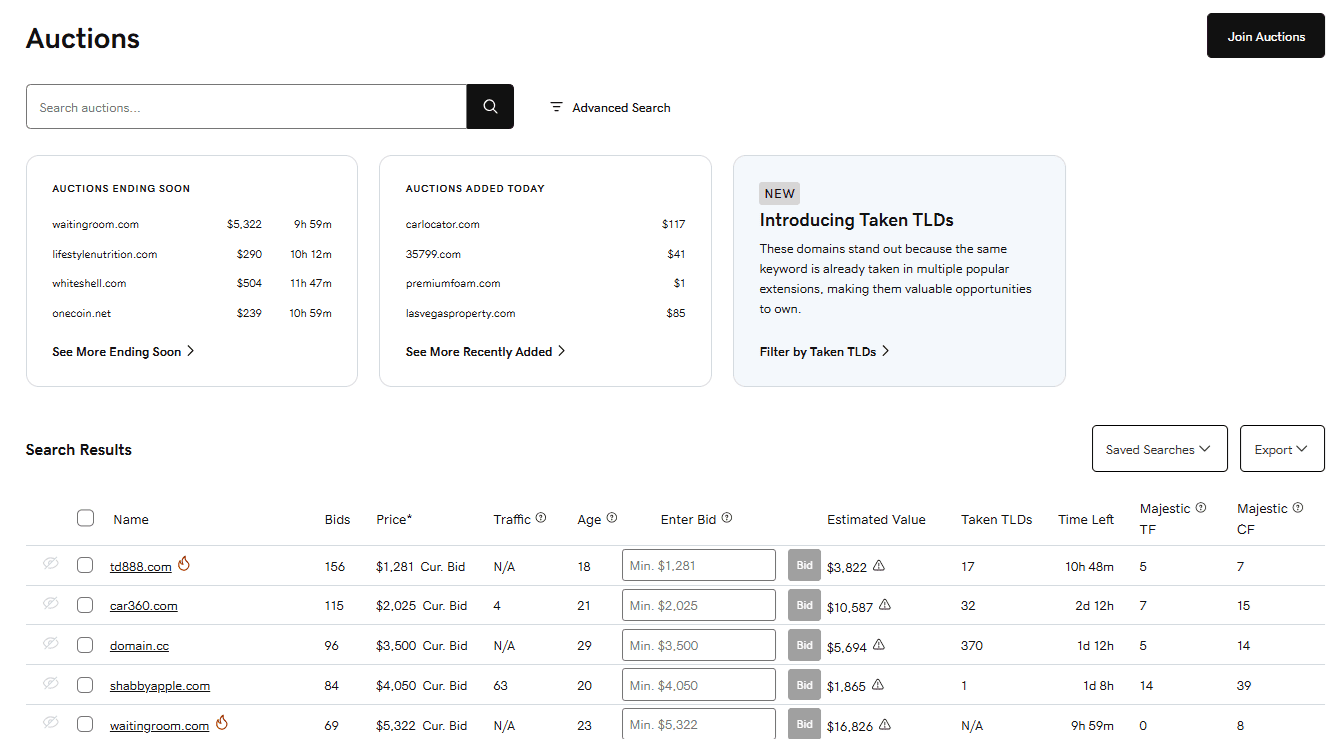
Simply put, GoDaddy Auctions is an online marketplace for buying and selling domain names. While most people use GoDaddy to register a brand new web address, the auction platform is where pre-owned or expired domains are traded.
When a person or business stops paying for their domain, or when an investor decides to sell a valuable name they own, it often ends up here. The platform is massive, giving you access to thousands of registered names.
To participate in the bidding, you generally need a low-cost annual membership, which keeps the marketplace professional and secure for everyone involved.
Understand the Different Types of Auctions
Not every domain on the platform is sold the same way. To use our GoDaddy domain auctions tips effectively, you first need to know which type of listing you are looking at:
- Expired Domain Auctions: These are domains that the previous owner forgot to renew. They are often highly sought after because they might already have existing traffic or “authority” from years of use.
- Public Auctions: These are listed by individual sellers who want to find the highest bidder. They typically last for 7 days.
- Buy It Now: Some sellers don’t want to wait for a bidding war. They set a fixed price, and the first person to pay it wins the domain instantly.
- Offer/Counter-Offer: This is more of a negotiation. You submit an offer you think is fair, and the seller can accept it, reject it, or send back a counteroffer.
- Closeouts: If an expired domain doesn’t receive any bids during its regular auction, it enters a closeout phase. Here, the price drops every day until someone buys it for a very low, flat fee.
GoDaddy Domain Auction Tips for Buyers
Success on the GoDaddy platform isn’t just about having the highest bid. It is more about strategy, research, and knowing when to walk away. Here are practical GoDaddy domain auction tips to help you win the right domains at the right price.
1. Use the Watch List and the Investor App
Never bid on a domain the moment you see it. Instead, add it to your Watch List. This allows you to track the activity without driving up the price early. Using the GoDaddy Investor app is a pro move because it sends real-time push notifications to your phone.
For example, if a domain you want is ending in 10 minutes, the app will alert you so you can jump in at the last second rather than sitting at your computer all day.
2. Vet the Domain’s History
A domain might look great, but it could have a dark past. Before bidding, check domain history using tools like the Wayback Machine or an SEO backlink checker.
- Check for Spam: If the domain was used for shady pharmaceutical ads or gambling in the past, Google might have blacklisted it.
- Check Backlinks: An expired domain with links from reputable sites like The New York Times or Forbes is worth much more than a brand-new one.
3. Mastering the Proxy Bid.
GoDaddy uses a Proxy Bidding system. This means you enter the absolute maximum you are willing to pay, and the system automatically bids the minimum amount necessary to keep you in the lead.
Your best bet to win an auction is to use random numbers. Instead of bidding $100, bid $103 or $107. Most people bid in round numbers, so a few extra dollars can often win you the auction.
4. Beware of the Auction Extension.
Unlike eBay, GoDaddy has an anti-sniping rule. If someone places a bid in the final moments (usually the last 5 minutes), the auction clock resets to 5 minutes.
Don’t try to snipe at the last second. It won’t work. Instead, wait until the clock is under two minutes to place your bid. This forces other bidders to decide quickly if they want to go higher.
5. Hunting in the Closeouts.
If you are on a tight budget, head to the closeouts section. These are domains that finished their auction with no bidders. Prices start at $11 and drop every day. By the final day, you can snag a domain for as little as $5 (plus the renewal fee). It is the best place to find “hidden gems” that everyone else missed.
6. Verify the Renewal Risk
In expired auctions, there is a small window where the original owner can still renew the domain even after the auction ends. If they do, your bid is cancelled, and your money is refunded.
Don’t get emotionally attached to a domain until it is officially in your account. Always have a “Plan B” domain in your watch list just in case.
7. Filter by Bids to Find Quality
When searching the marketplace, use the advanced filters to sort by the number of bids. If a domain has 10 or 20 bids, it usually means other professional investors have already vetted it and found value. While the competition is higher, it’s a quick way to filter out the junk and find names that have actual market demand.
GoDaddy Domain Auction Tips for Sellers
Selling a domain requires more than just listing it and hoping for the best. You need to make your asset attractive to the right audience. Here are the top GoDaddy domain auction tips to help you get the best price for your digital real estate:
1. Set Realistic Prices with Appraisal Tools
Use GoDaddy’s free Domain Value Appraisal tool to get a baseline. It uses machine learning and data from millions of sales to give you a fair market range.
While the appraisal is a great starting point, check NameBio or DNJournal for recent sales of similar keywords. If the tool says $1,200 but similar names are selling for $500, listing at $1,000 might leave your domain sitting on the shelf for years.
2. Use “Buy It Now” and “Floor” Prices Wisely
Many corporate buyers have a set budget and don’t want to wait seven days for an auction to end.
- Buy It Now: Setting a clear “Buy It Now” price captures impulsive or time-sensitive buyers.
- Floor Price: If you are using Afternic (GoDaddy’s partner network), set a “Floor Price.” This is a hidden minimum that allows GoDaddy’s sales agents to negotiate and close a deal on your behalf without calling you for every small offer.
3. Point Your Nameservers to Afternic
This is one of the most effective GoDaddy domain auction tips. If you point your domain’s nameservers to Afternic, your commission rate can drop from 25% to 15%. Plus, it enables “Fast Transfer,” which means the buyer gets the domain instantly, and you get paid much faster.
4. Create a For Sale Landing Page
When a potential buyer types your domain into their browser, they should see a professional “This Domain is for Sale” page rather than an error or a blank screen.
GoDaddy offers “CashParking” and “For Sale” landers. This allows you to capture direct navigation traffic, which refers to people who want the name so badly that they type it directly to see who owns it.
5. Categorize and Tag Your Listings
A common mistake every seller makes is leaving their listing details blank. GoDaddy’s search engine uses categories and tags to help buyers narrow down their choices. If your domain isn’t categorized, it won’t show up when a buyer filters for “Real Estate” or “Technology.”
Be specific with your tags. If you are selling a domain like AustinOrganicGardening.com, don’t just list it under “General.” Tag it under “Home & Garden,” “Organic,” and “Regional.”
Mentioning specific selling points, such as “local SEO potential” or “high-growth market,” in the description helps your name stand out when professional investors are comparing 10 different options.
6. Leverage Fast Transfer for Better Exposure
To truly succeed as a seller, your domain must be eligible for fast transfer. This happens when you point your nameservers to Afternic/GoDaddy.
Not only does the commission drop from 25% to 15%, but your domain will also appear as a “buy it now” option on over 100 other registrar sites (like Namecheap or Domain.com). This massive distribution network ensures that a buyer searching anywhere on the web can find and buy your domain instantly.
7. Use 7-Day Public Auctions for High-Demand Names
If you have a domain that is short, keyword-rich, or ends in a popular extension like .ai or .com, a 7-day public auction is often better than a “Buy It Now” listing.
Start the bid low (e.g., $10 or $20) to attract a high volume of watchers. As the bidders compete, the domain gains momentum. This bidding-war environment often results in a much higher final price than you would have set.
8. Don’t Hide Your WHOIS Data
While privacy is usually a good thing, when you are actively trying to sell a domain, it can be a roadblock. Serious corporate buyers often use WHOIS lookups to find the owner’s contact info.
If you’re comfortable, temporarily turn off WHOIS privacy or use a dedicated sales email address in your contact info. This allows a motivated buyer to reach out to you directly for a private negotiation, which can sometimes bypass auction fees entirely.
9. Group Domains into Niche Bundles
If you have multiple related domains (e.g., https://www.google.com/search?q=AustinPlumber.com, https://www.google.com/search?q=AustinPlumbingPros.com, and https://www.google.com/search?q=PlumbingAustin.com), list them all at the same time.
Professional investors often look for niche dominance. Seeing that one seller owns the most relevant names in a category can encourage a buyer to make a bulk offer to take over the entire set.
Conclusion
Domain trading doesn’t have to be a gamble. By using my above GoDaddy domain auctions tips, you can move from being a casual observer to a savvy investor or a prepared business owner.
The key is to stay disciplined, do your homework before placing a single bid, and use the platform’s automated tools to your advantage. Whether you are hunting for a bargain in the closeouts or listing your own valuable assets for sale, patience and research are your best friends.
GoDaddy Domain Auction Tips FAQs
Is GoDaddy auctions worth it?
Yes, it is worth it because it is the largest domain marketplace on the web. This means buyers get access to a huge inventory of expired names with traffic, and sellers get their listings in front of the largest number of potential bidders.
How to win a GoDaddy auction?
If you want to win, use the Proxy Bidding system. Enter the absolute maximum you are willing to pay and let the system bid the minimum for you. Also, keep an eye on the auction during the final minutes, but don’t expect to snatch it at the last second, as every new bid adds five more minutes to the clock.
How do GoDaddy domain auctions work?
The process is simple: you pay a small annual fee to join. Once you’re a member, you can search for domains using keywords. You place bids on names you want, and if you’re the high bidder when the clock stops, you win. After you pay, it usually takes between 1 and 15 days for the domain to move into your account.
Does GoDaddy negotiate domain prices?
GoDaddy itself doesn’t usually negotiate prices since it acts as the middleman. However, for “Offer/Counter-Offer” listings, you are negotiating directly with the owner. GoDaddy also has a Domain Broker Service where you can hire an agent to reach out to a domain owner and negotiate a fair price on your behalf if the name isn’t currently listed for auction.