 DomCop
Building a website for your small business or a new side project is one of the best ways to reach more people in 2026. Whether you are a local plumber or a digital creator, a solid site builds trust and helps you find new customers. But starting a brand-new website from scratch can be a real struggle. It often takes a long time for search engines like Google to notice you and start sending traffic your way.
This is exactly why many savvy business owners choose to buy old domains instead of new ones. An old or expired domain name comes with a good history, existing links from other sites, and even a steady stream of visitors. These perks give you a major head start and can help you rank much faster.
But how will you buy old domains, and most importantly, where will you find them?
In this guide, I will walk you through how to buy expired domain listings safely. We will look at the benefits, the risks, and the step-by-step auction process so you can secure a great name for your business.
What are Old Domains?
In simple words, old domains are web addresses that were registered by someone else in the past. These domains have a history on the internet, which means search engines like Google already know they exist.
There are two main types you will come across when you look to buy old domains. First, there are aged domains. These are websites that are currently active and have been online for many years. The owner might just be ready to sell the business or the name.
Second, you have expired domains. These domains exist because the original owner forgot to renew their yearly subscription or decided they no longer want the website. When this happens, the domain returns to the market.
As these domains have been around for a while, they carry a lot of trust and authority that a brand-new name just doesn’t have yet.
Why Would Someone Want to Buy an Old Domain?
People buy old domains because they offer a shortcut to better search engine rankings. A brand-new domain name usually sits in a sandbox period for months while Google decides if it is trustworthy. Using an older name allows you to skip this waiting period. Because the domain already has a history, your new content can start appearing in search results almost immediately.
Another practical reason to buy an expired domain name is to take advantage of existing traffic through redirects. Imagine you own a shop that sells kitchen knives. If you find an old cooking blog that used to get thousands of visitors daily, you can buy that domain and set up a 301 redirect. This means anyone who clicks an old link to that blog is automatically sent to your store. It turns an old web address into a constant stream of potential customers without paying for ads.
Some users also buy these domains to build a private blog network (PBN). This involves owning several high-authority old sites and using them to link back to a main business website. This passed-on “link juice” helps the main site rank much higher for competitive keywords.
Finally, some people simply buy and sell domains for profit, which is called “Domain Flipping”. They look for old domains for sale that have valuable keywords or short names, purchase them at a low auction price, and sell them later to a buyer who needs that specific brand name.
Benefits of Buying Old Domain Names
Buying old domains offers several strategic advantages that help you grow much faster than starting with a new address. Here are some of the main benefits of using an old domain:
- SEO Advantages: This is the biggest reason to choose an older name. As I said before, you can skip the sandbox period where Google typically hides new sites from the top results. Since the old domain comes with history, your new content can start ranking and appearing in search results almost immediately.
- High-Quality Backlinks: You inherit links from other websites that were built over the years. Getting a link from a major news site (like The New York Times) or a university blog is very tough, but an old domain might already have them.
- Immediate Visitor Traffic: Many people buy expired domains with traffic that still comes in from old bookmarks, social media posts, or search rankings. This means you can have real people visiting your site on day one.
- Faster Search Indexing: Search engine crawlers visit established domains more frequently. When you post a new article, it will likely be found and listed in search results much quicker than on a brand-new site.
- Better Branding Opportunities: Many short, memorable, or keyword-rich names are already taken. Buying an older domain is the only way to get a professional-sounding name that perfectly fits your business.
- Improved Trust Signals: An older registration date suggests stability. Both users and search algorithms tend to trust a domain that has been around for five or ten years more than one created yesterday.
Drawbacks of Using Old Domains
Buying an old domain can be a great move, but it is a gamble. You might get a high-traffic domain, or inherit a lot of hidden problems. Here are the main risks to keep in mind when buying old domains:
- Hidden SEO Penalties: This is the biggest danger. If the previous owner used spammy tricks or posted low-quality content, search engines might have penalized the site. Inheriting a penalty means your new posts will struggle to show up in search results.
- Toxic Backlink Profiles: Not all links are helpful. Some old domains are filled with thousands of bad links from unrelated or untrustworthy sites. These bad links can actively hurt your rankings and make your new project look like spam to search algorithms.
- Topic Mismatch: Relevance is very important in SEO. If you buy a strong domain that was once about gardening and try to turn it into a tech blog, the old authority will not transfer well. Search engines can get confused if the new content is too different from the old history.
- Expensive Bidding Wars: Obviously, you are not the only one looking for a domain. Popular names usually attract many bidders, which can drive the price from a few dollars to thousands in a matter of minutes. It is easy to overspend if you get caught up in the heat of an auction.
- Legal Risks: Some domains expire because of trademark battles. If you buy a name that is too similar to an existing brand, for example, Nikee.com or Appl.com, you could face a lawsuit. The original brand owner can even legally take the domain back from you without a refund.
- Bad Reputation: A domain might have been used for scams or unwanted content in the past. Even if the SEO seems okay, the name itself can be blocked by email providers or social media platforms, making it hard to run a clean marketing campaign.
Buying an Old Domain: Step-By-Step
Getting your hands on a quality old domain is a process that requires good timing and a clear plan. You cannot simply buy them like a new registration. Instead, you have to follow the lifecycle of the domain as it moves from the original owner back into the open market.
Step 1: Understand the Domain Expiration Process
Every domain follows a specific schedule once the owner stops paying for it. First, it enters a grace period that usually lasts about 30 days. During this time, the original owner can still renew it for a standard price. If they still don’t renew, the domain enters a 30-day redemption period. Now, at this stage, the owner has to pay a much higher penalty fee to get it back.
Finally, if no one saves it, the domain enters a pending delete status. This is your window to act before it is released to the general public.
Step 2: Determine Where Your Desired Domain Name is Listed
Not all expired domains end up in the same place. Different registrars have partnerships with specific auction houses. For example, many names that expire on GoDaddy will show up on GoDaddy Auctions. Others will likely appear on platforms like:
- Porkbun
- Spaceship
- Cloudflare
- NameSilo
- NameJet
- SnapNames
- Sedo
- Namecheap
You can use free tools like DomCop and ExpiredDomains.net to search across multiple lists and find out exactly where the name you want is being held.
Step 3: Place a Backorder or Bid on the Domain Name
Once you find the ideal domain, you need to secure your spot. If the domain is still in its final days of expiration, you can place a backorder. This is like hiring a service to jump to the front of the line the millisecond the domain drops. If the domain is already in an auction, you will need to place a bid.
Most auction sites use an anti-sniping rule: if you bid in the final seconds, the clock is extended by a few more minutes to give everyone a fair chance.
Step 4: Transfer and Build the Website
If you win the auction or the backorder is successful, the old domain is officially yours. You will then move it into your own registrar account. This might involve using an authorization code, also known as an EPP code, to verify the move.
Once the transfer is fully complete, you can start building your site or setting up 301 redirects. Make sure to check the old links and point them to your new pages to keep all that valuable SEO power.
Things to Consider When Buying an Old Domain
Before you spend your money on an old domain for sale, you need to do some detective work. Not every old name is a winner, and some can even bring your SEO down if they have a bad history. Here are the five key factors you should check to make sure you are getting a high-quality asset.
(1) Domain age
While age alone is not a magic ranking factor, it tells you a lot about the domain’s reliability. An older domain has had more time to earn trust from search engines and build a network of links. You can use free tools to check the original registration date. Generally, a domain that has been around for five to ten years is more valuable than one that was only active for a few months.
(2) Domain Traffic
You want to see if the domain still has a pulse. Check the historical traffic using tools like Ahrefs or SEMrush to see if real people are still visiting the site. If the domain was recently active, it might still have rankings for certain keywords. However, be wary of sudden, massive drops in traffic. This could be a sign that the previous owner was hit by a Google penalty, which you definitely want to avoid.
(3) Backlinks profile
This is where the real value of an expired domain name lies. You are looking for quality over quantity. A few links from highly trusted sites are worth more than thousands of links from random, low-quality blogs.
Look at the anchor text (the clickable words in the links) to ensure they look natural and are not filled with spammy keywords. Spammy anchor texts would look somewhat like best-seo-links-4u.xyz or cheap-backlinks-fast.biz.
(4) Overall website quality
It is important to see what the website actually looked like in the past. You can use a tool called the Wayback Machine to view snapshots of the site from years ago. If you see that it was once used for gambling, adult content, or suspicious pharmaceutical ads, it is best to stay away. You want a domain that has a clean history and was used for a legitimate business or blog.
At this point, I may sound like a parrot repeating myself, but the history of the domain you’re buying should be squeaky clean. Otherwise, you’re just wasting your money on a useless site.
(5) Google index status
A quick way to check if a domain is in good standing is to see if it is still indexed. Go to Google and type site:domainname.com into the search bar. If results show up, it means Google still recognizes the site. If nothing appears, the domain might have been de-indexed due to a manual penalty. You can also check the index status through Google Search Console.
Buying a de-indexed domain is very risky because it is often impossible to get it back into search results.
How to Buy Old Domains with GoDaddy
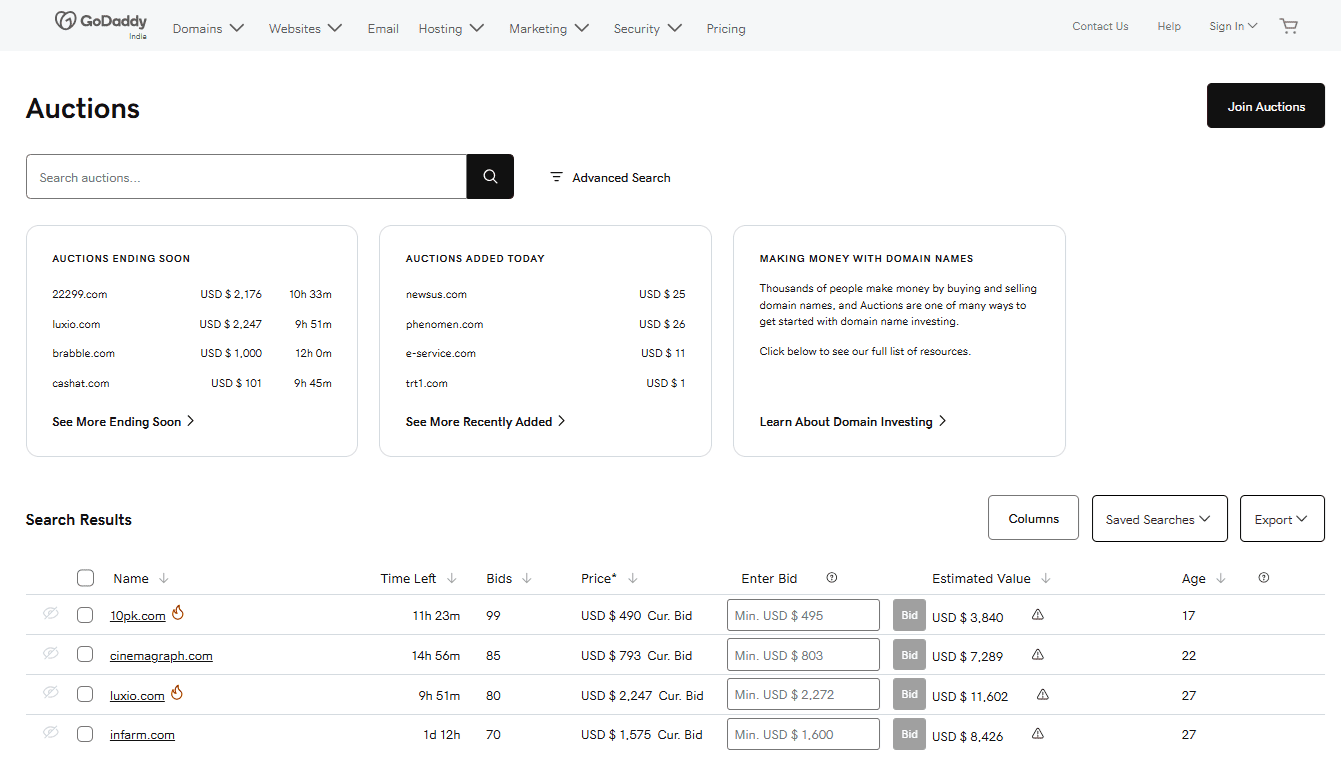
Buy Old Domains at GoDaddy Auctions
GoDaddy is one of the largest hubs for anyone looking to buy old domains. Rather than just searching for new names, you can use their valuation tools to find high-value assets that already have a history. Here are the main ways you can use GoDaddy to buy old domains.
GoDaddy Domain Auctions
This is the primary marketplace for finding and winning old domains. When a domain owner fails to renew their registration, the name eventually ends up here before it is released back to the general public.
Expired Domain Listings: GoDaddy provides you a detailed list, where you can bid on names that are about to expire. These are the most valuable ones because they retain their existing backlink power and authority.
Bidding Strategy: Most auctions last seven days. If you find a name you want, you can use one of three bidding types:
- Manual Bidding: You enter a specific amount to take the lead immediately.
- Proxy Bidding: You set a maximum price, and the system automatically raises your bid by the smallest increment necessary to keep you in the lead.
- Buy It Now: Some listings let you skip the auction entirely by paying a fixed price to get the domain instantly.
Closeouts: If an auction ends without a winner, the domain moves to a closeout list where you can buy it immediately for a very low, fixed price.
Domain Valuation and Value Appraisal Tools
Before you spend money on an auction, you need to know if the price is fair. GoDaddy provides two key ways to check this:
- Domain Valuation Tool: This free tool uses an algorithm to provide an instant estimate of a domain’s value. It looks at factors such as domain length, domain extension (.com), and the popularity of certain keywords.
- Value Appraisal Tool: This service provides a much deeper look into a domain’s actual market worth. Looking at real-world sales data from the last 20 years and current market trends, it gives you a realistic idea of what people might actually pay for the name. For example, if you are eyeing an old domain in the fitness niche, the appraisal tool can show you what similar names recently sold for.
Conclusion
Ultimately, choosing to buy old domains is one of the most effective ways to bypass the slow growth phase of a new website. An established web address gives you the authority that can save thousands of dollars in marketing costs over time. Whether you plan to build a site or flip the domain for a profit, the potential for a high return is significant.
For those looking to find the best deals, DomCop is a great resource for scanning thousands of expired domain listings to find names with the best backlink profiles.
As long as you verify the domain’s history and ensure it has a clean track record, an older domain is one of the smartest investments you can make.
How to Buy Old Domains FAQs
Are old domains safe to use for SEO?
Yes, they are safe as long as they have a clean history without manual penalties or spammy backlink profiles. You can research the domain on the Wayback Machine and check its index status to ensure you are not inheriting a blacklisted asset.
How much does an old domain cost?
Prices vary a lot depending on demand and metrics. While some closeout domains cost as little as $10 to $50, highly competitive names with strong authority can reach thousands of dollars in a domain auction.
Can I buy a domain after it expires?
Yes, but you usually have to wait until it passes the owner’s grace and redemption periods. You can then buy it through a backorder service or bid on it during a registrar’s public auction.
Can I change the niche of an expired domain?
You can, but radical topic changes may cause you to lose the SEO value you already have. Search engines prioritize topical relevance, so moving from a cooking blog to a wellness site can trigger a sandbox period in which your rankings reset.
What is the best way to buy expired domain names?
The most efficient method is using an auction platform like GoDaddy Auctions or a dedicated search tool like DomCop. These platforms allow you to filter millions of listings by SEO metrics, saving you hours of manual vetting.