
Many expired domain guides make the process sound easy. Find a domain with good metrics, check the backlinks, and buy it before someone else does.
But after spending real time in the expired domain space, I can tell you it’s never that straightforward. A domain can have hundreds of backlinks and still be a terrible purchase. It might have been abandoned for years, repurposed multiple times, or tied to a history you want absolutely nothing to do with. Metrics tell part of the story, but they don’t tell you everything.
So instead of relying on theory, I decided to run a simple experiment: find quality expired domains for under $100 and see how many would still look attractive after a closer inspection. Let’s walk through the full expired domain under $100 case study.
Step 1: Building a List of Affordable Expired Domains
The first challenge in this expired domain case study was finding domains worth reviewing.
Without filters, expired domain databases contain thousands of listings. Going through them manually would take forever. So I turned to DomCop, an expired domain search engine that pulls authority scores, backlink data, and pricing into one place. It’s not free, but for anyone serious about finding quality expired domains, it’s absolutely worth it.
If you’d rather start without spending anything, expireddomains.net is a solid free alternative. It won’t give you the same depth of data, and you’ll need to jump between different tools to vet each domain properly, but it’s a perfectly reasonable starting point.
Back to DomCop. From the dashboard, I selected “Expired Domains” and clicked “Advanced” to open the full set of filters.
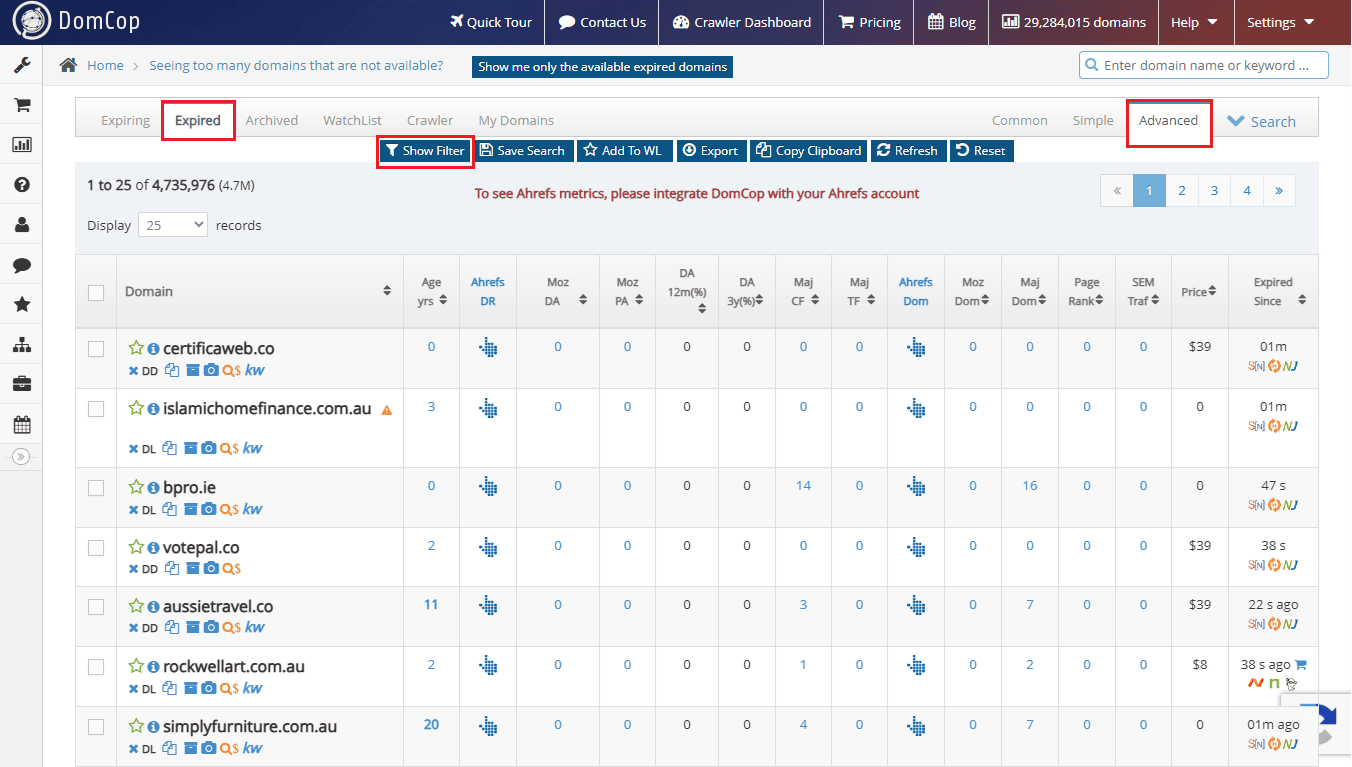
The Filters I Used
My goal at this stage wasn’t to find perfect domains. It was to cut out the obvious junk without making the results so narrow that I’d have nothing left to work with.
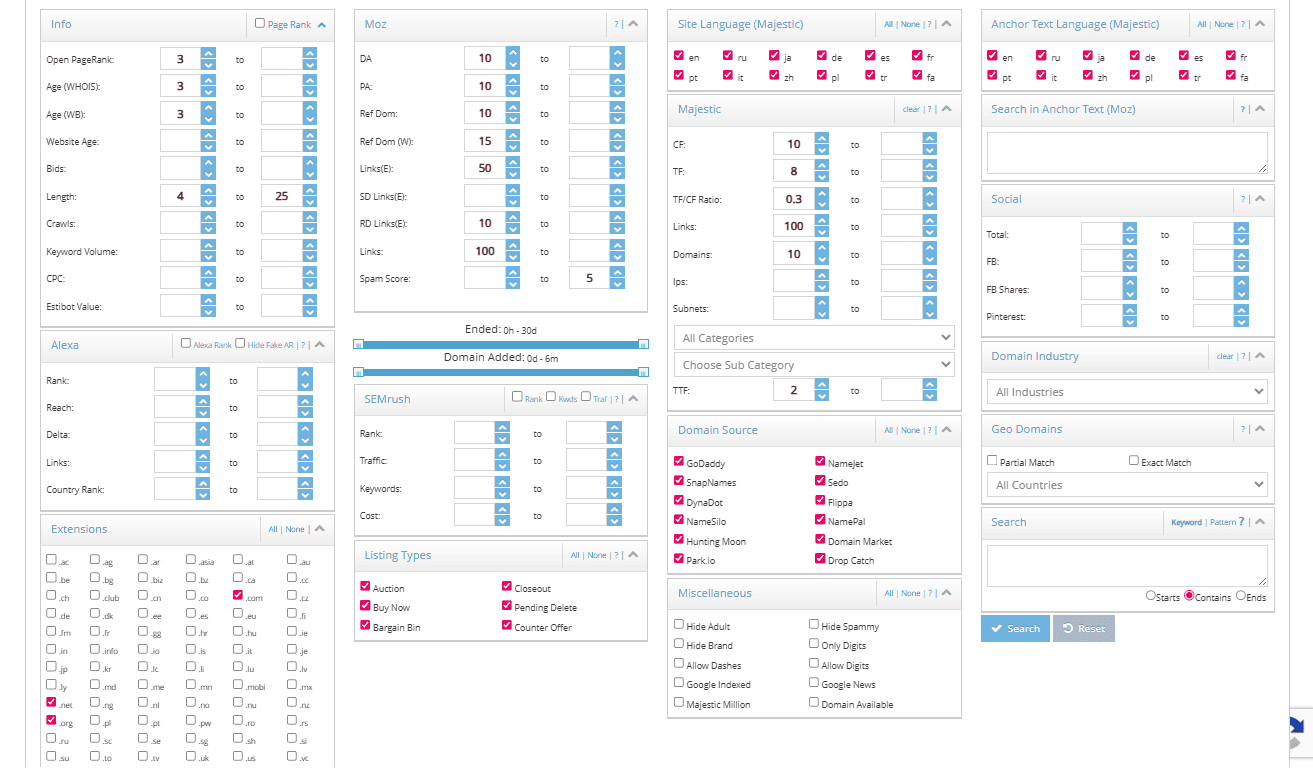
Here are all the filters I set and why:
Maximum price: $100. This felt like a realistic budget for most people looking to buy expired domains without going overboard. No point spending more when the goal is to find affordable options.
Extensions: .com, .net, and .org only. These three extensions have the broadest appeal and recognition. Filling the results with niche TLDs like .io or .co would have made it harder to find domains with universal utility, so I kept it simple.
Minimum Domain Authority: 10 and Page Authority: 10. These are intentionally low numbers. Setting the bar too high would have wiped out many affordable domains before I even had a chance to investigate them. Ten is just enough to filter out the truly weak options.
Minimum referring domains: 10. Domains with fewer than 10 referring domains usually don’t have enough backlink history to make the analysis worthwhile. Ten is the floor, not the goal.
WHOIS age and Wayback Machine age: 3 years minimum. A domain that has been registered and actively used for at least three years is far more likely to have a real history worth investigating. Fresh domains or ones with gaps in their Wayback Machine records often turn out to be thin or unreliable.
Minimum Trust Flow: 8 and Citation Flow: 10. Trust Flow measures the quality of links pointing to a domain, while Citation Flow measures the volume. Setting both at a low minimum was enough to cut out the weakest candidates without making the search too tight. I didn’t want to miss affordable gems by setting these too high.
Listing types: Bargain Bin and Counter Offer included. At first, I removed these and focused only on straightforward buy-now listings. The results became too limited. Once I added Bargain Bin and Counter Offer back in, the pool grew to a much more workable size. Worth knowing if you run into the same issue.
After applying all of these DomCop filters, I exported the results to a CSV file.
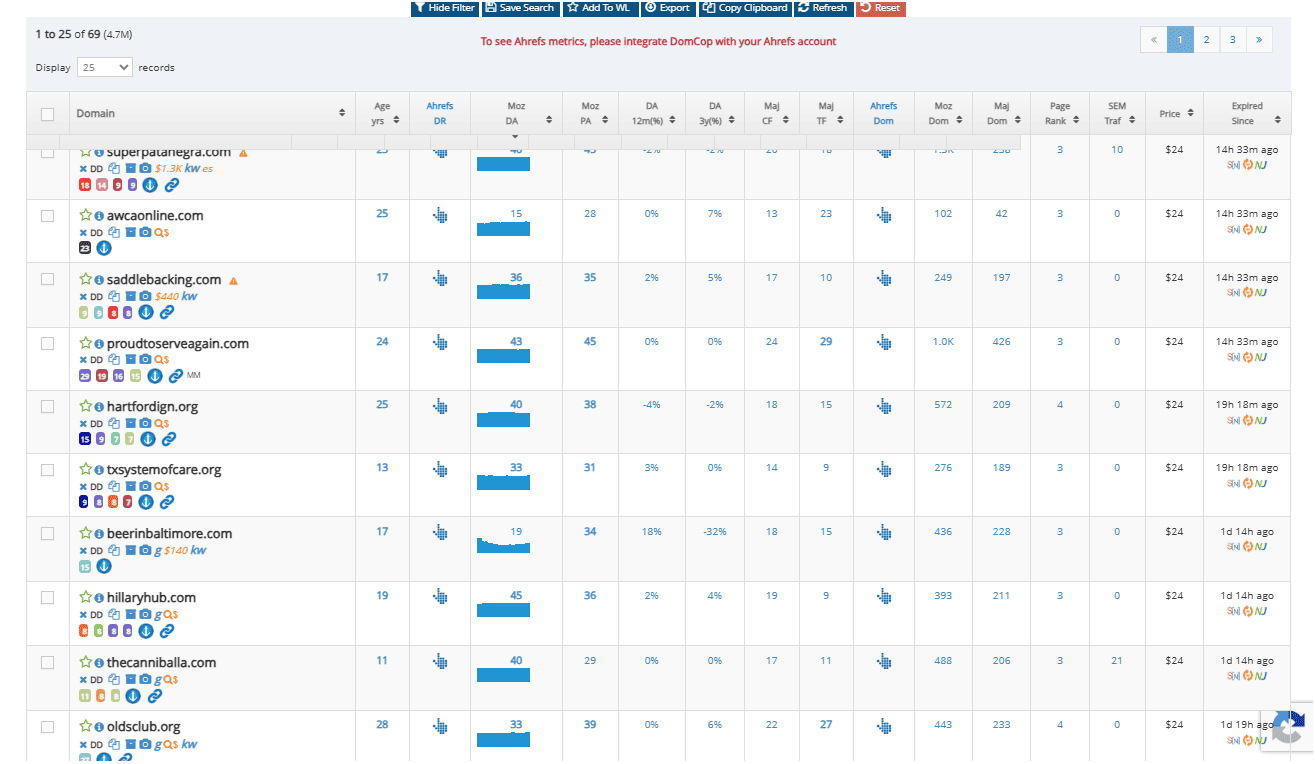
The final list contained 69 domains. On paper, many of them looked promising. Decent authority scores, years of registration history, and some with hundreds of referring domains. But expired domains have a habit of looking far better in a spreadsheet than they do in real life, and that’s exactly why the next step matters so much.
Step 2: Digging Into the History of Each Domain
With the spreadsheet ready, I moved on to the part that I find most interesting about this whole process.
Numbers help narrow a list, but they can’t tell you what a domain has actually been used for over the years. To uncover that story, I used two tools: Ahrefs Backlink Checker for backlink analysis and the Wayback Machine for domain history.
If you’ve never used the Wayback Machine before, it lets you view archived snapshots of websites from different points in time. In other words, you can see exactly what used to live on a domain long before it expired. That matters more than most people realise.
Think about it this way. You find a domain with strong authority metrics and hundreds of backlinks. It looks like a bargain. But then you pull up the Wayback Machine and discover the site spent several years as a gambling redirect before the owner abandoned it. Those metrics suddenly look a lot less impressive, don’t they?
For each domain, I checked snapshots across multiple years rather than just looking at a single point in time. I wanted to answer a few simple questions:
- Did the website serve a clear purpose?
- Did it stay focused on the same subject over time?
- Does anything in its past create risk today?
- Would I feel comfortable building on this domain?
As I worked through the list, something interesting started to happen. The domains that looked strongest in the spreadsheet weren’t always the ones that held up best in the archive review. And a few that looked average on paper actually had surprisingly clean and credible histories.
From the 69 domains, I selected 10 for a closer look.
Step 3: Reviewing All Selected Domains
Domain Review #1: bitpim.org
Bitpim.org jumped to the top of my list almost immediately because it combined strong metrics with a surprisingly low price.
According to Ahrefs Backlink Checker, the domain has a DR of 36, 3,000 backlinks (67% dofollow), and 653 referring domains (58% dofollow). That made it one of the strongest candidates in the entire dataset.
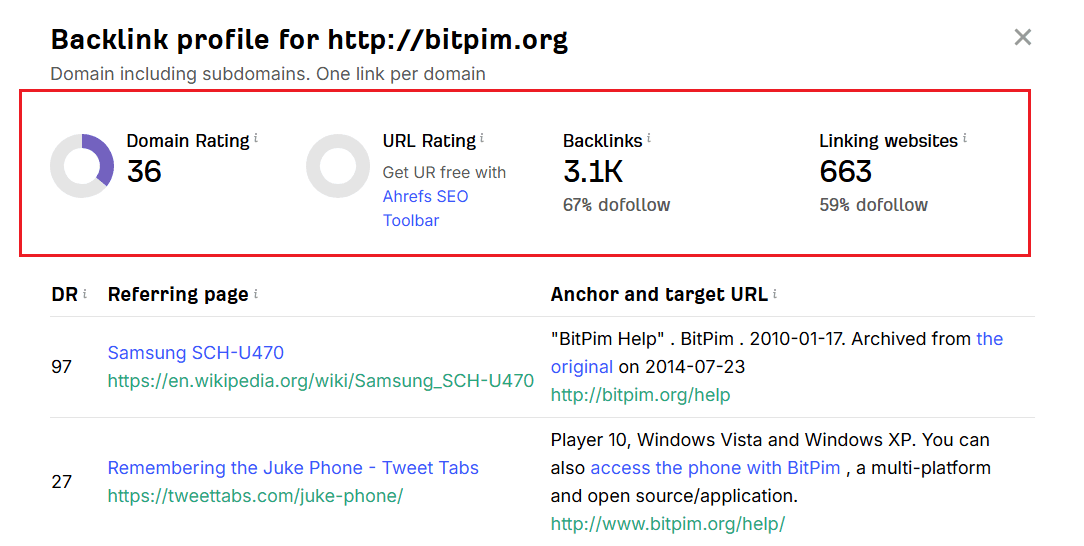
But numbers alone don’t tell the full story, so I opened the Wayback Machine and checked snapshots from 2006, 2018, and 2025.
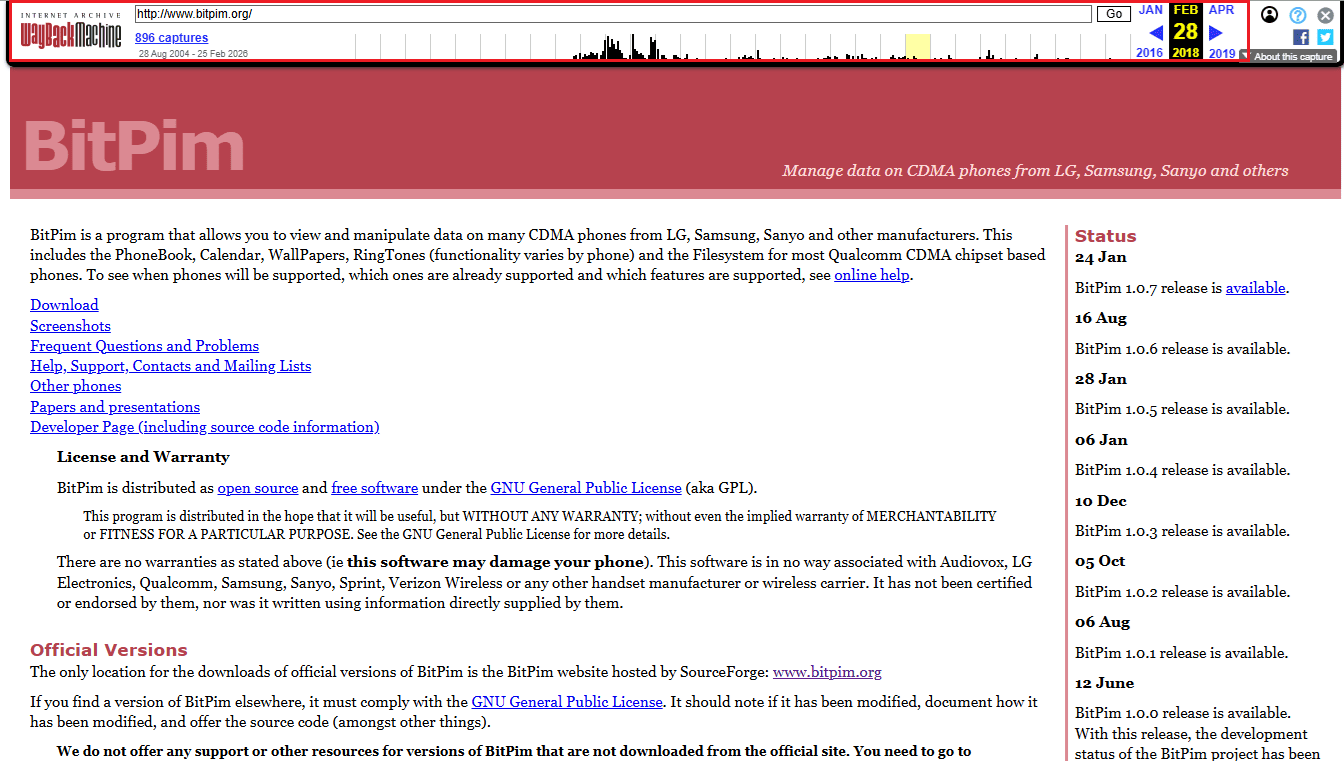
All three snapshots told the same story. BitPim was an open-source software program that let users view and manipulate data on CDMA phones from manufacturers like LG, Samsung, and Sanyo. The design changed over the years, but the purpose never did. Not once did I find spam links, casino redirects, or any sign that the domain had been used for something unrelated.
That kind of consistency is exactly what you want to see. The backlink profile makes complete sense for a real software project with a real user base. This one was an easy shortlist decision.
Verdict: Shortlisted. Consistent history from 2006 to 2025, clear purpose throughout, strong and legitimate backlink profile, no spam signals.
Domain Review #2: oldsclub.org
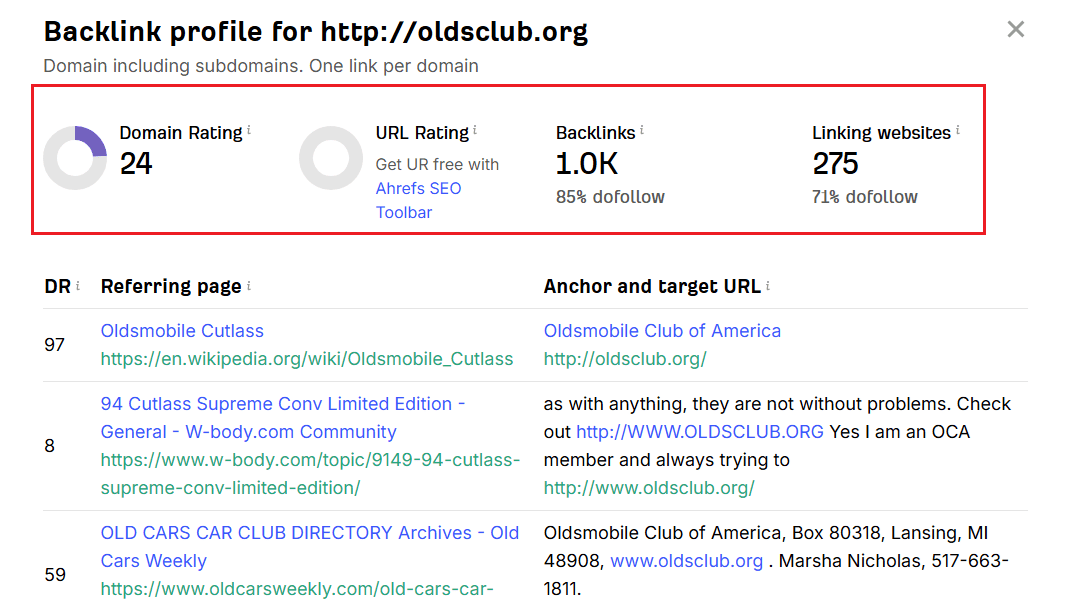
Oldsclub.org had a DR of 24, 1,000 backlinks (86% dofollow), and 270 referring domains (72% dofollow). Those dofollow percentages are high, which is a good sign.
I checked Wayback Machine snapshots from 2007, 2016, and 2025. The site was built around Oldsmobile enthusiasts, celebrating the car manufacturer’s history from its first hand-built wooden carriage in 1897 all the way through to the last 2004 Alero that rolled out of the Lansing, Michigan plant. Every snapshot showed the same community, the same purpose, and only cosmetic design updates along the way.
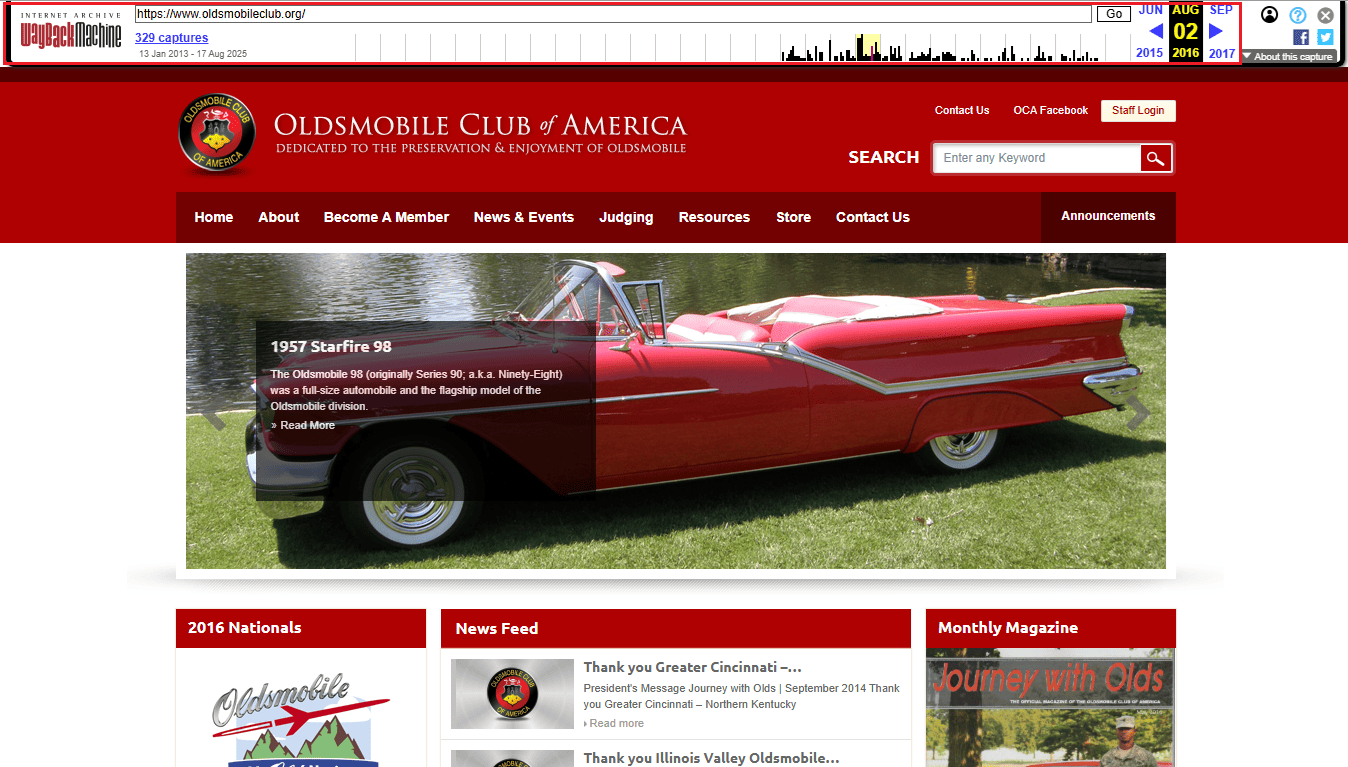
A long-running enthusiast forum like this naturally picks up links from automotive websites, member blogs, and community resources. That context makes the backlink profile far more credible than raw numbers alone. The domain spent years serving one specific audience, and it never drifted from that.
Verdict: Shortlisted. Consistent niche history from at least 2007, high dofollow percentages, no spam signals anywhere.
Domain Review #3: ongsci.org
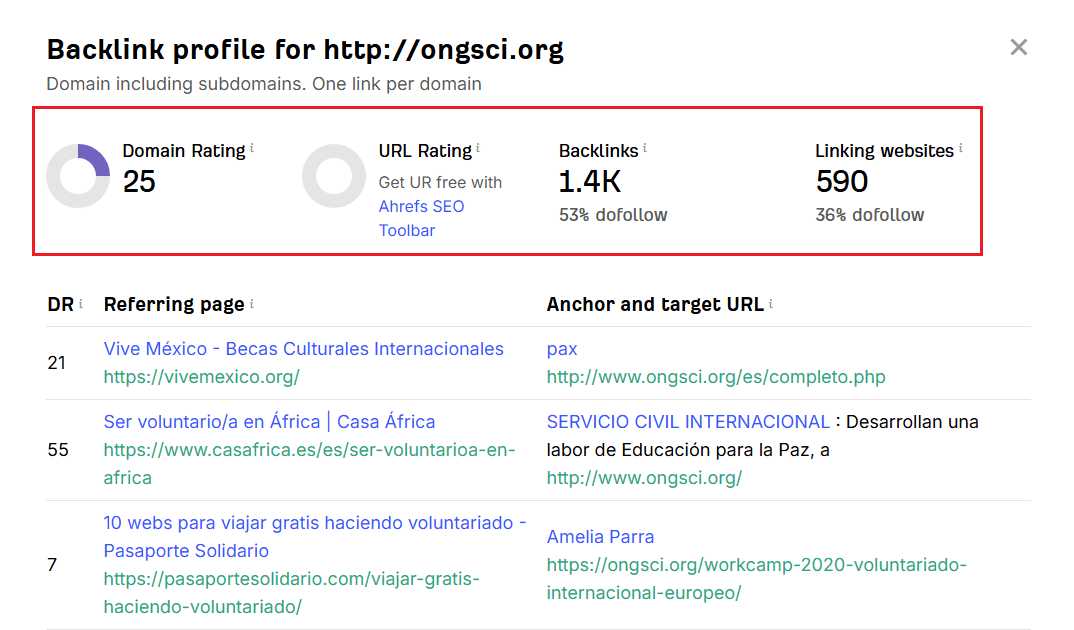
Ongsci.org was one of the more interesting finds in the whole dataset. DR 25, 1,300 backlinks (53% dofollow), and 584 referring domains (36% dofollow). That referring domain count is one of the highest in the group.
The Wayback Machine showed that the domain belonged to SCI Madrid, a branch of Service Civil International, a nonprofit organization founded in 1920. Their mission focused on promoting a culture of peace through international volunteering and cultural exchange, based on the idea of “Think globally, act locally.” Snapshots from 2006, 2017, and 2025 all showed the same organization working toward the same goals. No spam, topic shifts, or signs of misuse at any point.
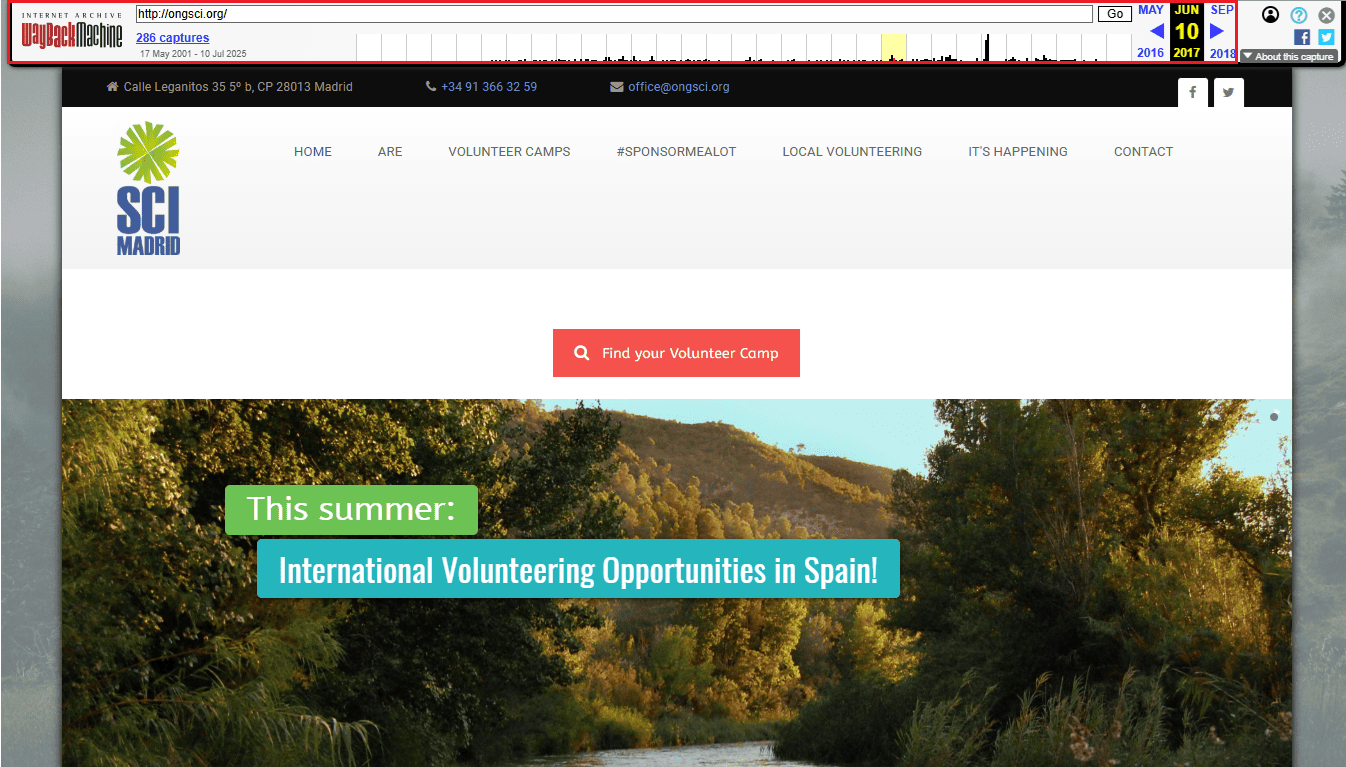
But the website is not in English (I translated it to show you what it was about). Depending on what you plan to build, that may or may not matter to you. For this review, it wasn’t enough to disqualify the domain, because the history itself is clean and the identity stayed intact throughout.
Verdict: Shortlisted. Stable nonprofit history across nearly two decades, strong referring domain count, and a completely clean record.
Domain Review #4: awcaonline.com
Awcaonline.com had a DR of 1.8, 481 backlinks (36% dofollow), and 227 referring domains (20% dofollow). The low dofollow percentages already raised a yellow flag before I even opened the Wayback Machine.
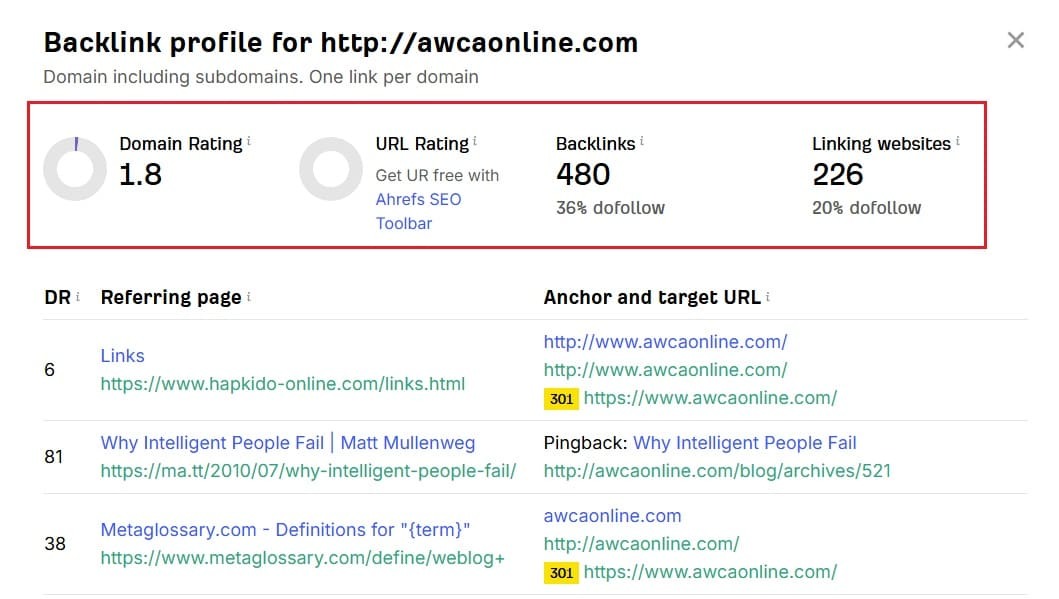
The early history was actually legitimate. The domain belonged to the AZ Wing Chun Gung Fu Association, a traditional martial arts organisation in Arizona dedicated to teaching and preserving authentic Yip Man Wing Chun. Snapshots from 2006 and 2019 showed a clean, focused site with no spam.
Then I checked 2025.
By that point, the domain had been redirected to a casino site called Topcasino, promoting games and coin casino content. That was enough to end the review right there.
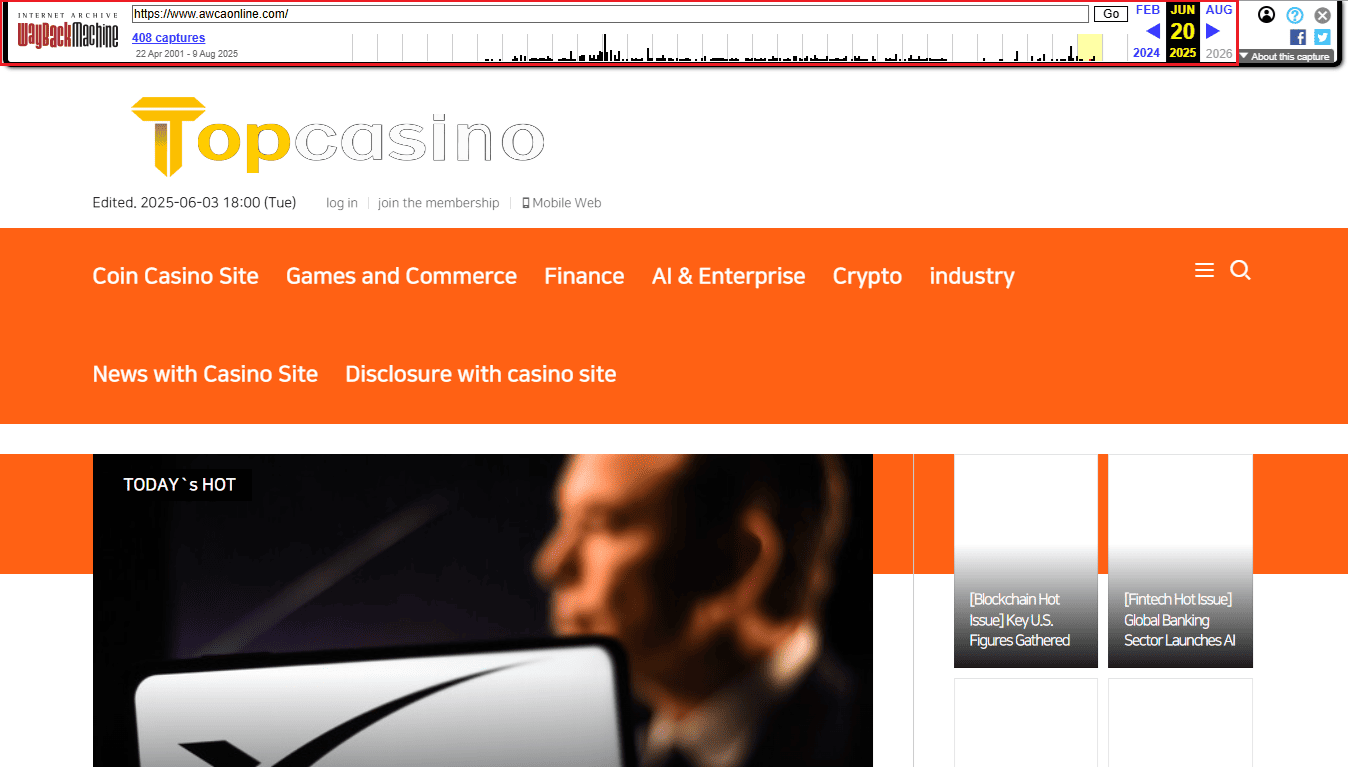
Even if the early history is clean, a recent casino redirect tells you that someone has already tried to exploit whatever authority this domain had. That’s not a foundation worth building on, especially when cleaner alternatives exist.
Verdict: Rejected. Casino redirect in recent history, low dofollow ratios across the board.
Domain Review #5: orchardbrands.com
Orchardbrands.com is a good example of why a clean history isn’t the only thing that matters.
DR 7, 342 backlinks (67% dofollow), and 244 referring domains (69% dofollow). Snapshots from 2011 and 2015 showed a real, established business. Orchard Brands was a collection of specialty clothing, footwear, household, and health brands for men and women. By 2018, the site was returning a 404.
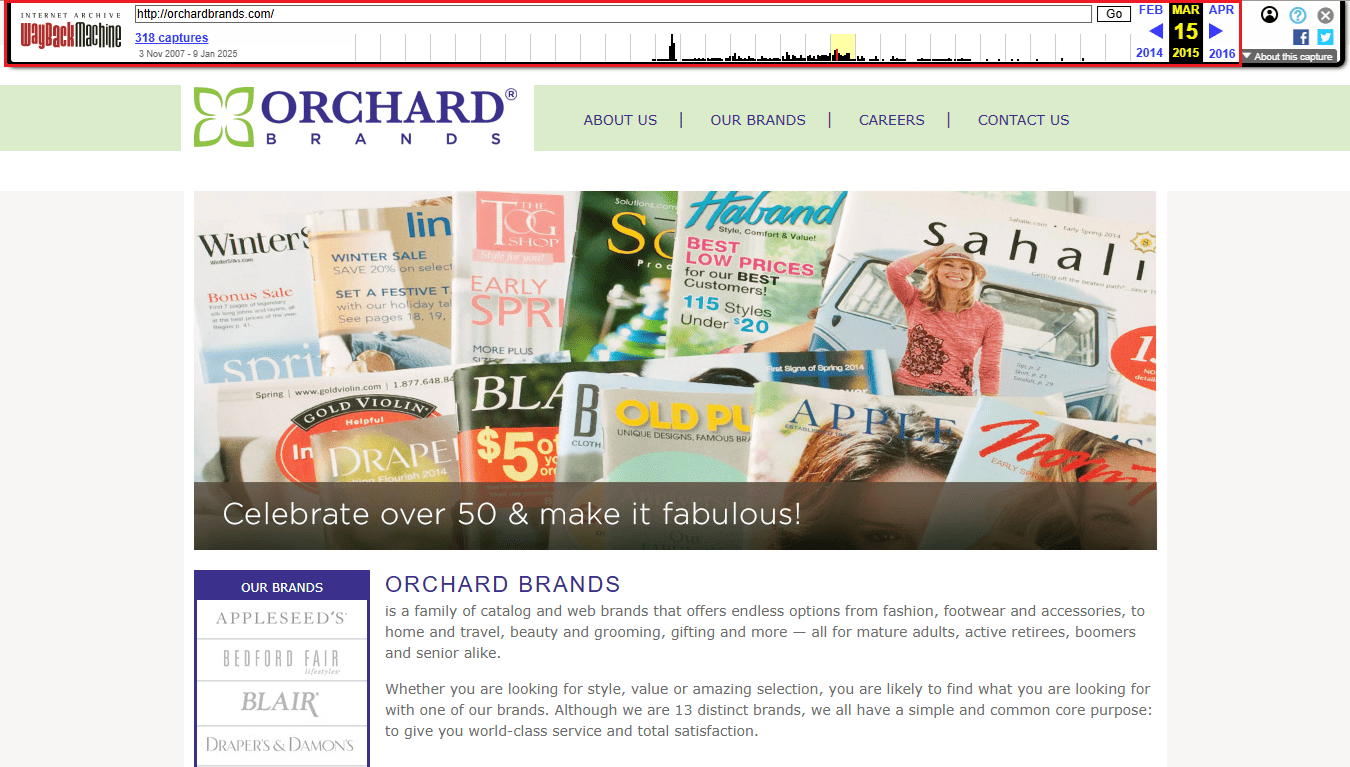
The history is clean, the site was legitimate, and there are no spam signals. So why reject it?
Because of the name. Orchard Brands was a known company with years of operating history. Buying a domain that is closely tied to an established business means you’re potentially stepping into trademark territory, and that’s a headache nobody needs (trust me on that). This isn’t a rejection based on spam or poor quality. It’s based on unnecessary risk when better alternatives exist in the same dataset.
Verdict: Rejected. Long association with a specific company, potential trademark concerns.
Domain Review #6: kansaiconnect.com
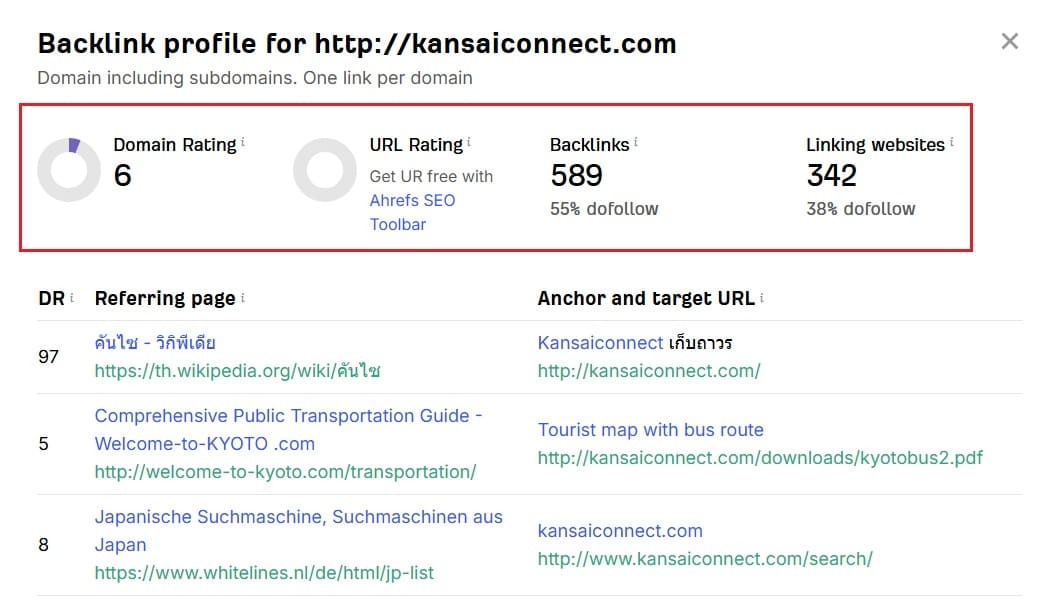
Kansaiconnect.com positioned itself as a site connecting Japan’s Kansai region to an English-speaking audience. DR 6, 576 backlinks (56% dofollow), and 336 referring domains (38% dofollow).
The archive history had problems from the start. Even back in 2006, the site featured an ad section linking out to domains like earn-dollars.com. Seeing that kind of link in a domain’s early history is a red flag that doesn’t go away just because time has passed.
From there, things got worse. By 2019, the hosting account had been suspended, and snapshots from 2023 showed the same suspended status. A domain that spent years inaccessible and had spam ad links in its early days is a difficult thing to justify buying.
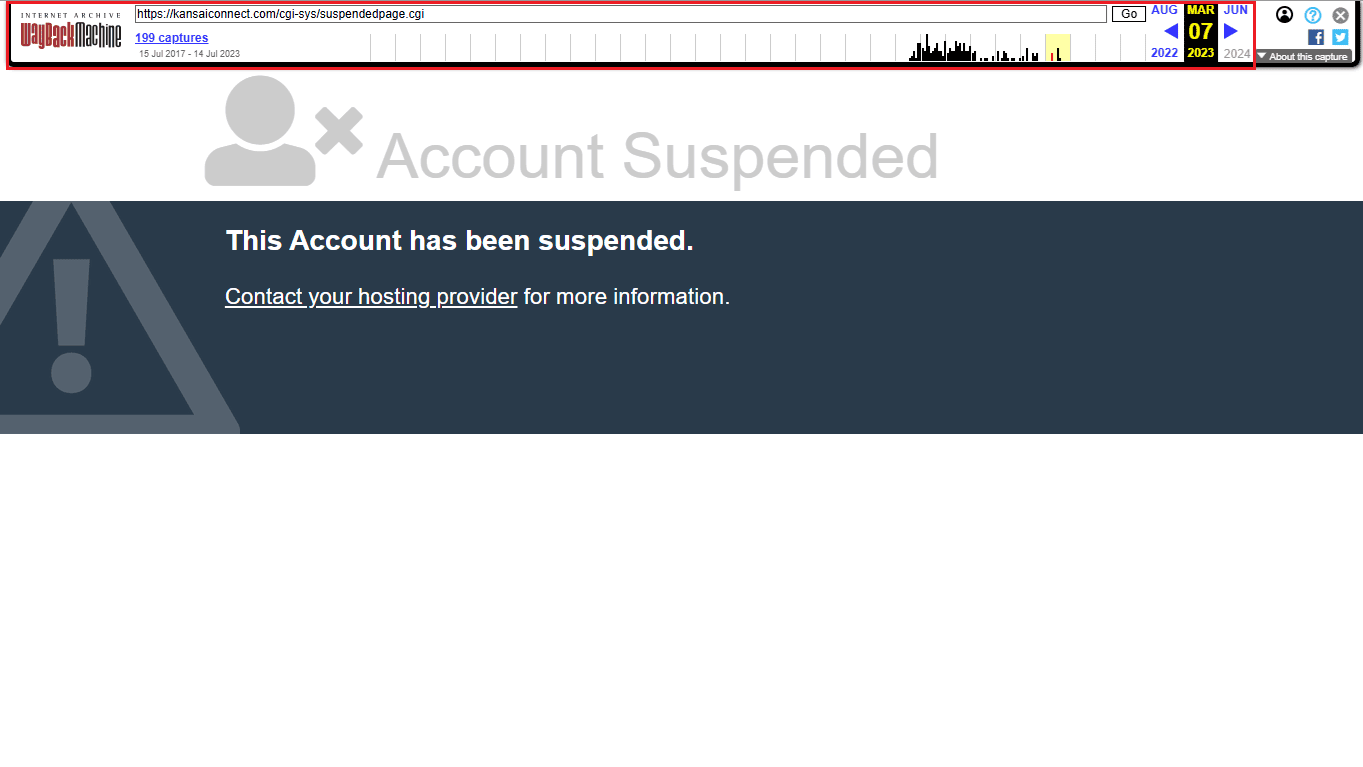
Verdict: Rejected. Spam ad links in early history, prolonged account suspension.
Domain Review #7: gabest.org
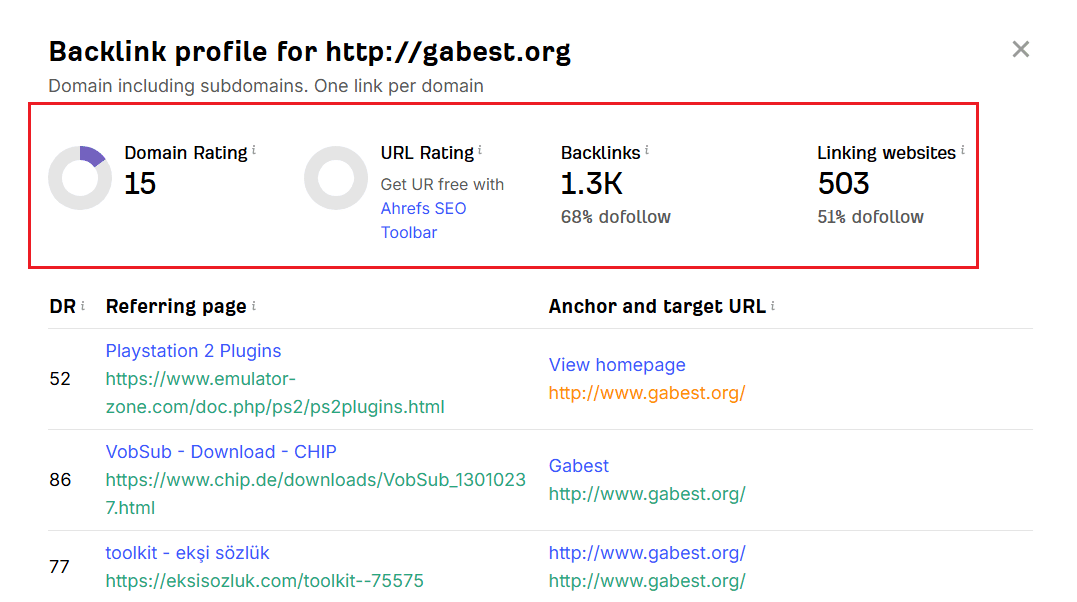
Gabest.org had DR 15, 1,300 backlinks (69% dofollow), and 501 referring domains (51% dofollow). On numbers alone, this looked decent.
But the 2009 Wayback Machine snapshot told a different story. The site was linking out to a string of sponsored listings for codec downloads across domains like pronto.com, errorsweeper.net, macrovision.com, and uberdownloads.com. That type of layout is a classic sign of a monetised parked page, not a real content site.
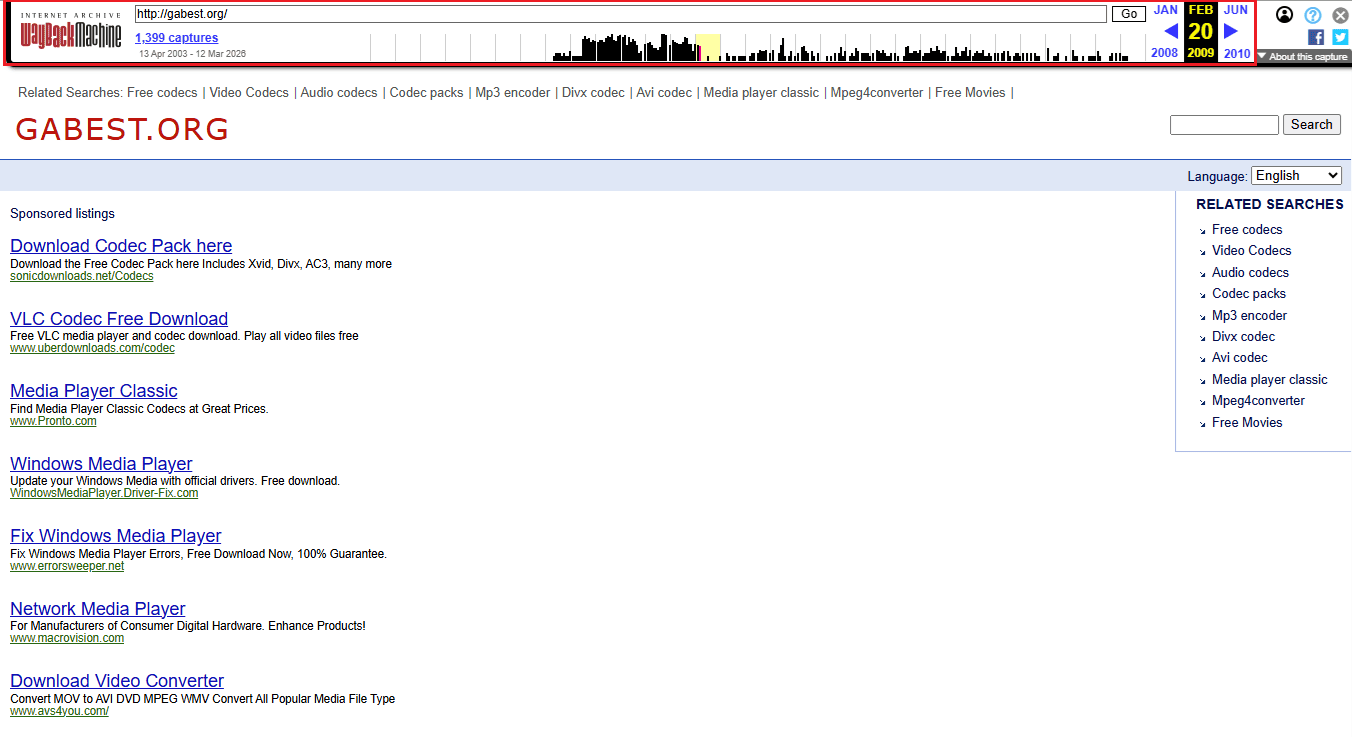
By 2019, the site had switched languages to Portuguese for reasons that weren’t clear from the archive. By 2023, it was returning a 403 Forbidden error. Multiple topic shifts, a sponsored link history, and an unexplained language change are all warning signs stacked on top of each other.
Verdict: Rejected. Sponsored link history, unexplained language shift, eventual 403.
Domain Review #8: proudtoserveagain.com
Proudtoserveagain.com had a genuinely legitimate early history. A 2006 snapshot showed it operating as part of the Troops to Teachers program, a joint U.S. Department of Education and Department of Defense initiative that helped military personnel transition into teaching careers at public schools. The 2017 snapshot showed the same content, same purpose.

Then from 2018 onward, the site started returning a 404 error.
The domain’s legitimacy is actually what creates the problem here. It was so tightly tied to a specific government program that repurposing it for anything else would feel completely out of place. The moment a visitor searched the name or dug into its history, they’d find a federal education initiative, not whatever you were trying to build. That kind of mismatch limits the domain’s usefulness.
Verdict: Rejected. Tied to a specific government initiative, 404 since 2018, very limited future use cases.
Domain Review #9: excelsiorinn.com
Excelsiorinn.com had DR 12, 847 backlinks (52% dofollow), and 380 referring domains (46% dofollow).
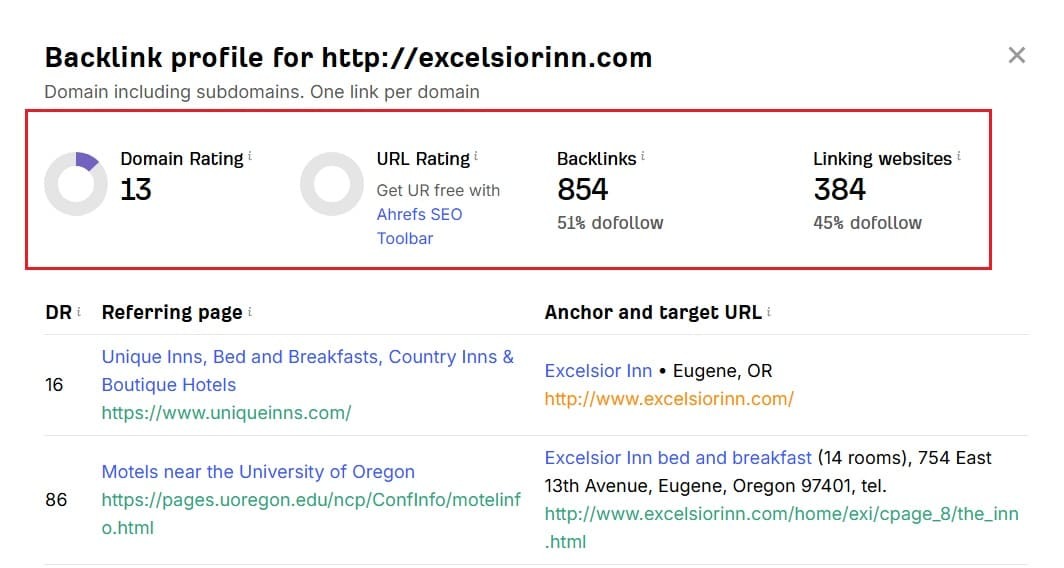
The early history was clean and pretty straightforward. A 2006 snapshot showed a simple restaurant and hotel website, and by 2016, the site had updated its design while keeping the same hospitality focus. No spam, no redirects, nothing suspicious.
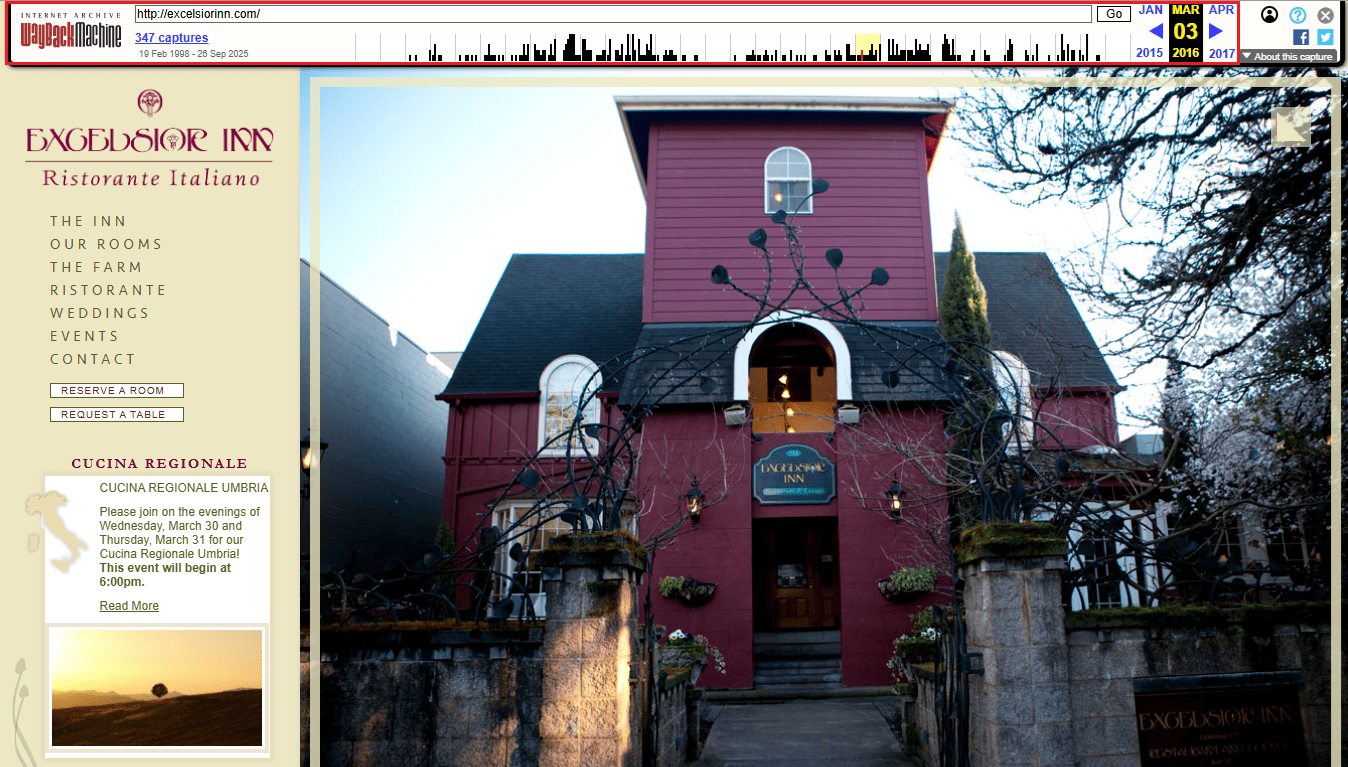
But from 2017 onward, the domain started showing an “Access Denied - Sucuri Website Firewall” message, and by 2024, it was returning a 403 Forbidden error.
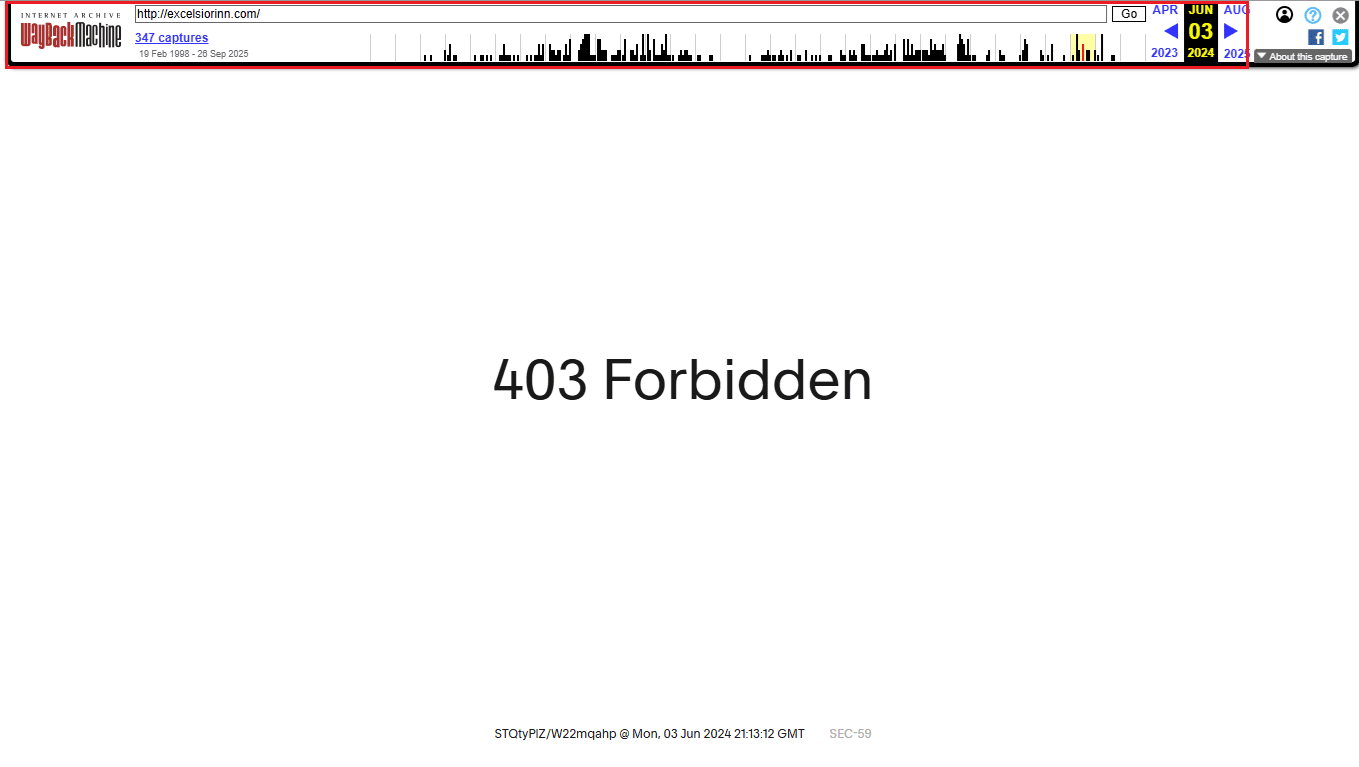
That unexplained firewall block from 2017 is a real concern. Without being able to see what the site showed during that blocked period, there’s no way to know whether the domain was compromised, redirected, or simply abandoned. That gap in the history is enough to keep it off the shortlist for now.
Verdict: Needs further investigation. Clean early history, but an unexplained firewall block from 2017 and a 403 by 2024 leave too many unanswered questions.
Domain Review #10: soumbala.com
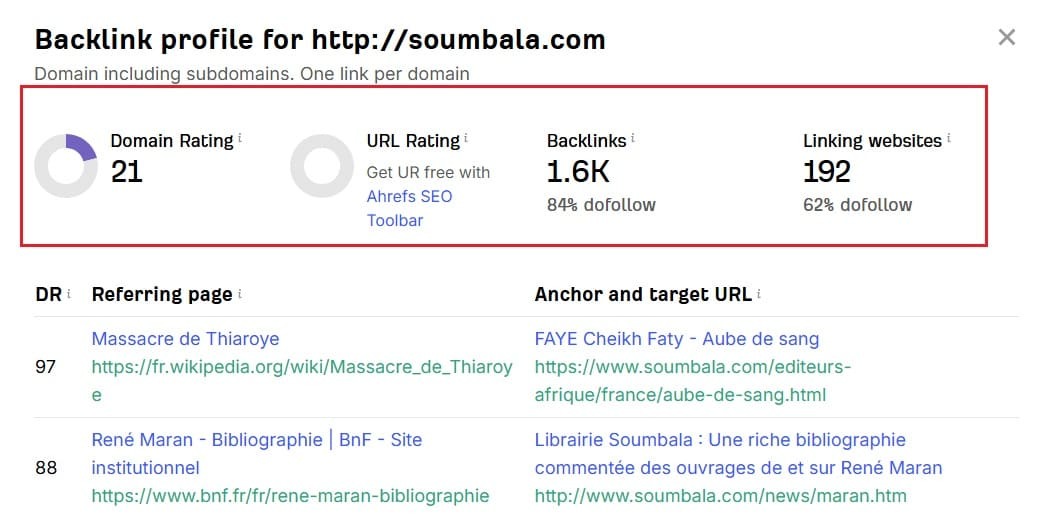
Soumbala.com had DR 21, 1,600 backlinks (84% dofollow), and 191 referring domains (62% dofollow).
The Wayback Machine history was actually quite clean. A 2007 snapshot showed an online bookstore, with a search catalog letting visitors browse by author, publisher, city, region, or keyword. The site was built around a genuine passion for connecting books with readers worldwide, and the name Soumbala was chosen deliberately to reflect that mission.
By 2017 the bookstore was still running with the same purpose, and snapshots through 2025 showed no changes, no topic shifts, and no spam.
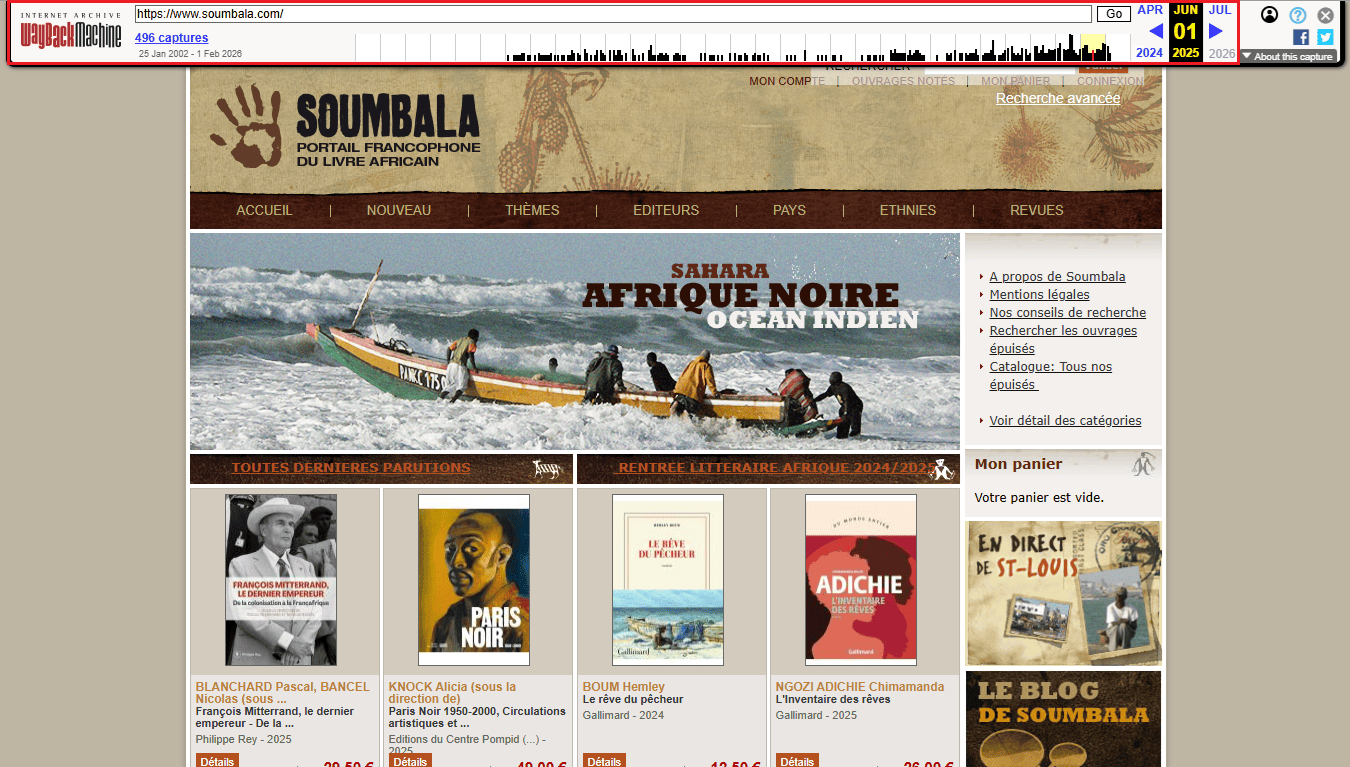
On history alone, this one would have been a serious contender.
But then I opened the live URL.
The domain is now redirecting to ALEXISTOGEL, an Indonesian online lottery and gambling site promoting Toto Macau betting. That's about as far from an online French bookstore as you can get.
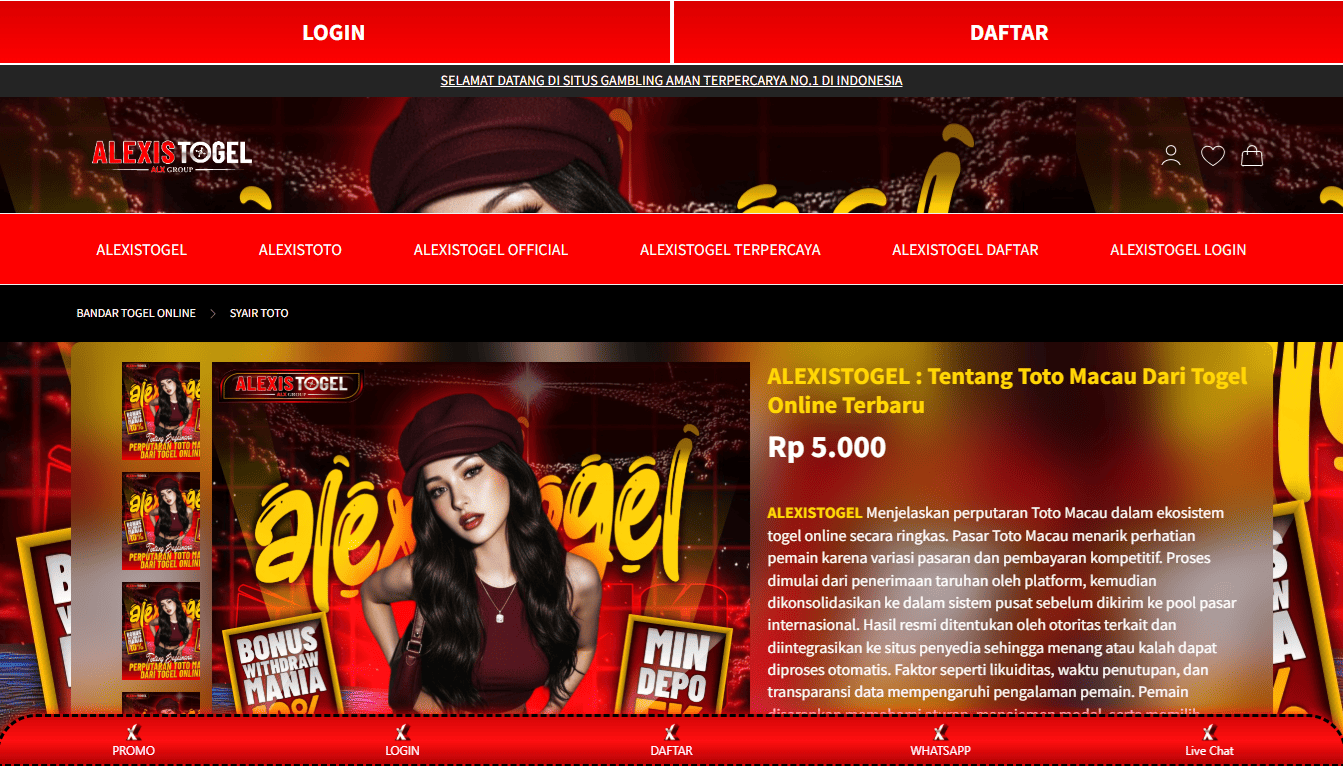
This is actually a good reminder of why checking the live URL matters just as much as checking the Wayback Machine. The archive can look spotless right up until the moment someone acquires the domain and redirects it to a gambling site. Whatever trust and authority soumbala.com built over nearly two decades of legitimate use has now been pointed at an online lottery platform, which is likely burning through that authority fast.
Verdict: Rejected. Clean archive history let down entirely by a recent redirect to an online gambling site. Not worth the risk.
Step 4: What the Full Review Revealed
Starting with 69 domains that passed all my initial filters, I reviewed 10 manually and here’s how they broke down:
| Stage | Count |
| Domains matching filters | 69 |
| Domains reviewed manually | 10 |
| Shortlisted | 3 |
| Needs further investigation | 1 |
| Rejected | 6 |
The three shortlisted domains, bitpim.org, oldsclub.org, and ongsci.org, all shared the same quality: a clear identity that stayed consistent across many years of archive history. Each one served a specific audience, stuck to its purpose, and showed no signs of misuse.
The six rejected domains each failed for a specific reason:
- awcaonline.com: casino redirect in recent history
- orchardbrands.com: legitimate past, but tied to a well-known company name
- kansaiconnect.com: spam ad links in early history, prolonged account suspension
- gabest.org: sponsored content layout, unexplained language shift, eventual 403
- proudtoserveagain.com: tightly tied to a government program with very limited future applications
- soumbala.com: clean archive history, but currently redirecting to an online gambling site
The one domain that still needs more investigation is excelsiorinn.com. It wasn't a clear rejection, but the unexplained firewall block from 2017 and the 403 error by 2024 left too many unanswered questions to move forward with confidence.
If you want to buy any of the above domains, just click on their links, and you’ll be directed to the domain marketplaces that are selling them.
Final Thoughts
Finding good quality expired domains under $100 is absolutely possible, but it takes more than sorting a spreadsheet by metrics and picking the cheapest option.
Out of 69 domains that passed all my filters, only three made the shortlist after a manual review. That ratio is pretty normal, and it tells you that this process works by elimination, not selection. You’re not looking for reasons to buy a domain. You’re looking for reasons not to.
The Wayback Machine and Ahrefs Backlink Checker do most of the heavy lifting once you have a list to work with. The real challenge is building that initial list efficiently, and that’s where DomCop earns its place. Without it, narrowing 69 domains from thousands of listings would have taken far longer. If you’re serious about finding affordable expired domains with real potential, it’s the tool that makes the whole process manageable.
A few minutes of archive research per domain can save you from buying something that looks great in a spreadsheet but carries hidden problems underneath. Do the history work. It’s always worth it.